"Projected Realities"
by Diana Jungeun Oh, Claudia Yalai Pang
Studio Freetime - Prof. Mike Szivos, Prof. Abigail Coover-Hume, Prof. Ashley Simone
Our degree project speculates on how architecture can be augmented by projected realities and explores new methods of designing and representing virtual objects as a means to test possibilities for manipulating the experience of space and the objects it contains. We propose that physical space can be tempered by a malleable overlay, creating a new condition of space achieved through the overlap of the physical and virtual.Our degree project speculates on how architecture can be augmented by projected realities and explores new methods of designing and representing virtual objects as a means to test possibilities for manipulating the experience of space and the objects it contains. We propose that physical space can be tempered by a malleable overlay, creating a new condition of space achieved through the overlap of the physical and virtual. The intention is to interrogate the virtual realm by raising questions about how it can be designed through the experimentation of projected realities.
Studio Freetime - Prof. Mike Szivos, Prof. Abigail Coover-Hume, Prof. Ashley Simone
Our degree project speculates on how architecture can be augmented by projected realities and explores new methods of designing and representing virtual objects as a means to test possibilities for manipulating the experience of space and the objects it contains. We propose that physical space can be tempered by a malleable overlay, creating a new condition of space achieved through the overlap of the physical and virtual.Our degree project speculates on how architecture can be augmented by projected realities and explores new methods of designing and representing virtual objects as a means to test possibilities for manipulating the experience of space and the objects it contains. We propose that physical space can be tempered by a malleable overlay, creating a new condition of space achieved through the overlap of the physical and virtual. The intention is to interrogate the virtual realm by raising questions about how it can be designed through the experimentation of projected realities.




Artist Statement
We are not designing a building. Rather, we are designing a set of interconnected spaces within which to test the design of projected realities.
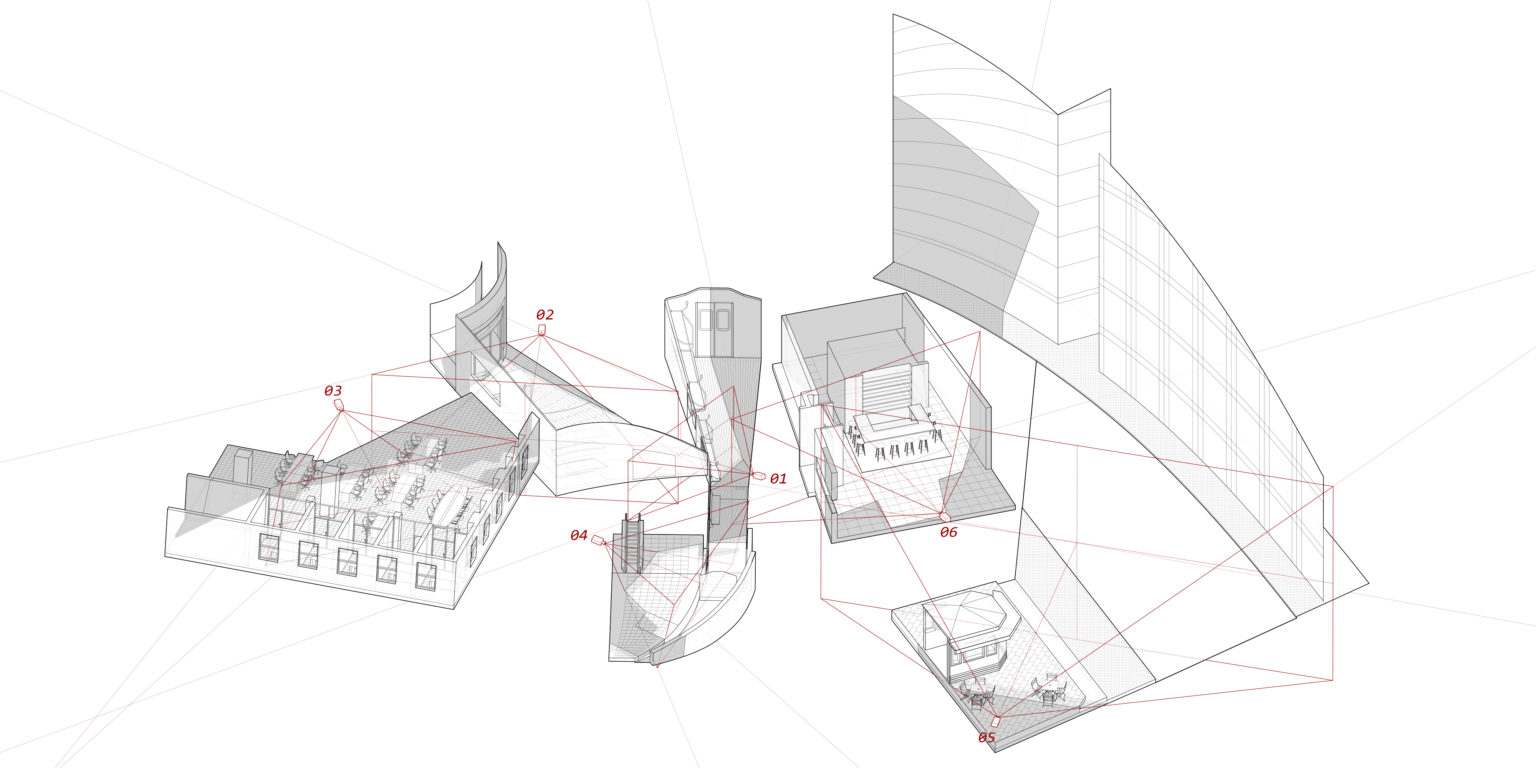
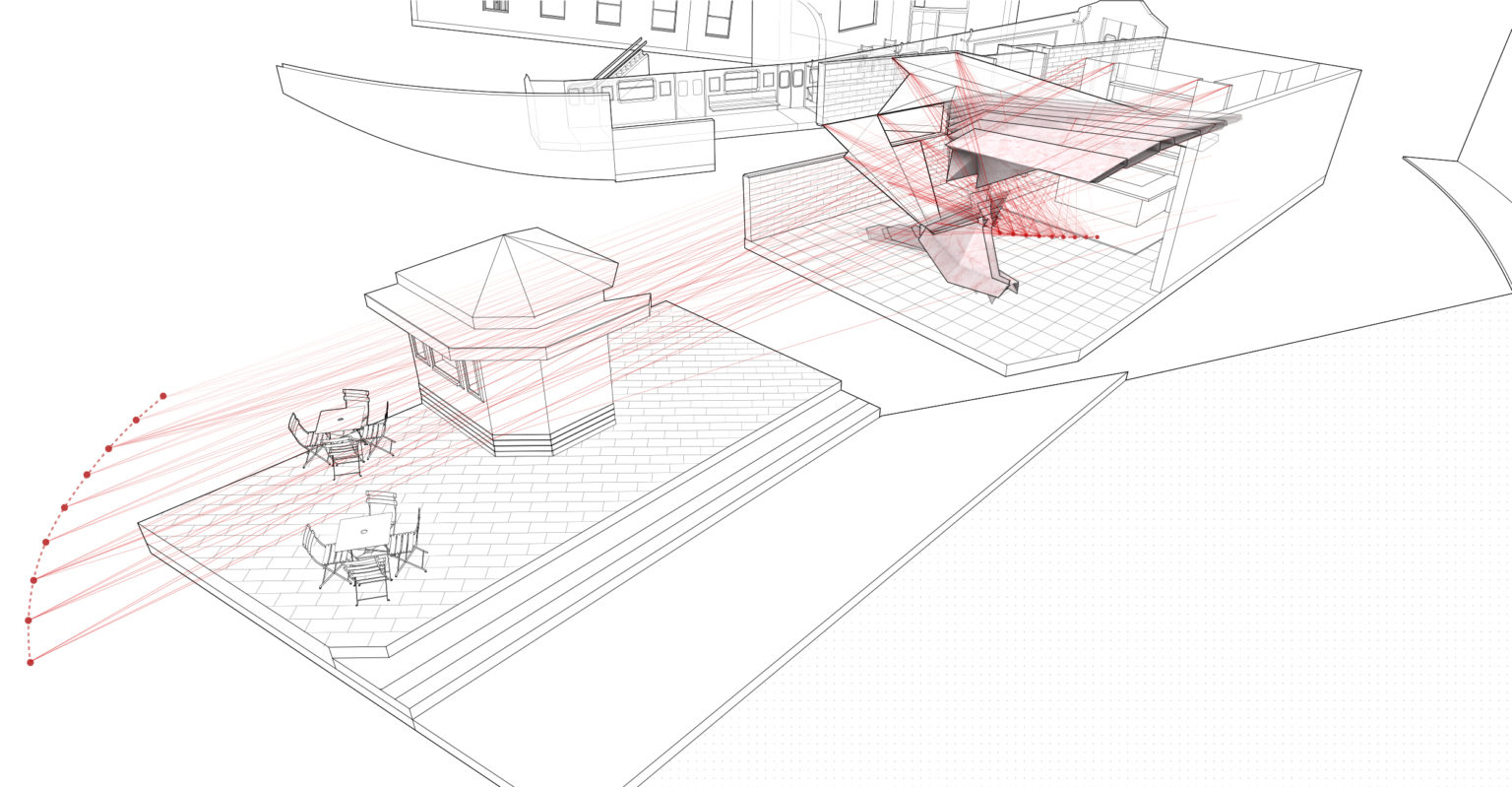
We constructed a set which appropriates a spatial sequence that exists in New York City as a prototypical site. A path in Midtown Manhattan along which a fictionalized routine of work and leisure takes place is broken up into fragments of spaces that are reconfigured and then linked through defined viewpoints. We believe that the understanding of architecture is also generated in discrete moments that accumulate into a coherent spatial experience. The set of the movie “Rear Window†used fragments of architecture to construct a whole world, and yet the experience of the spaces remained seamless. Spaces are rearranged to create strange spatial linkages − as if architecture becomes a stage set.
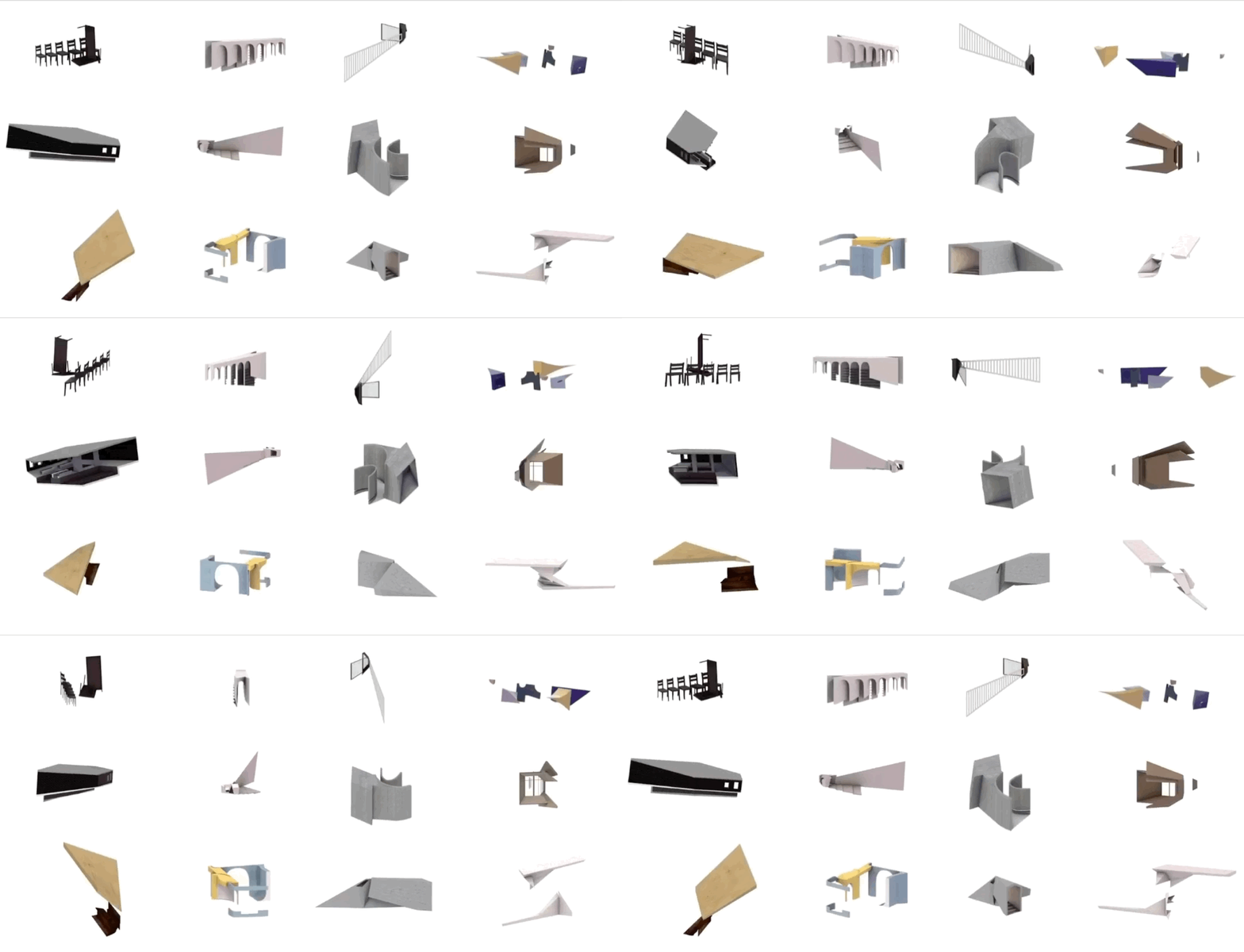
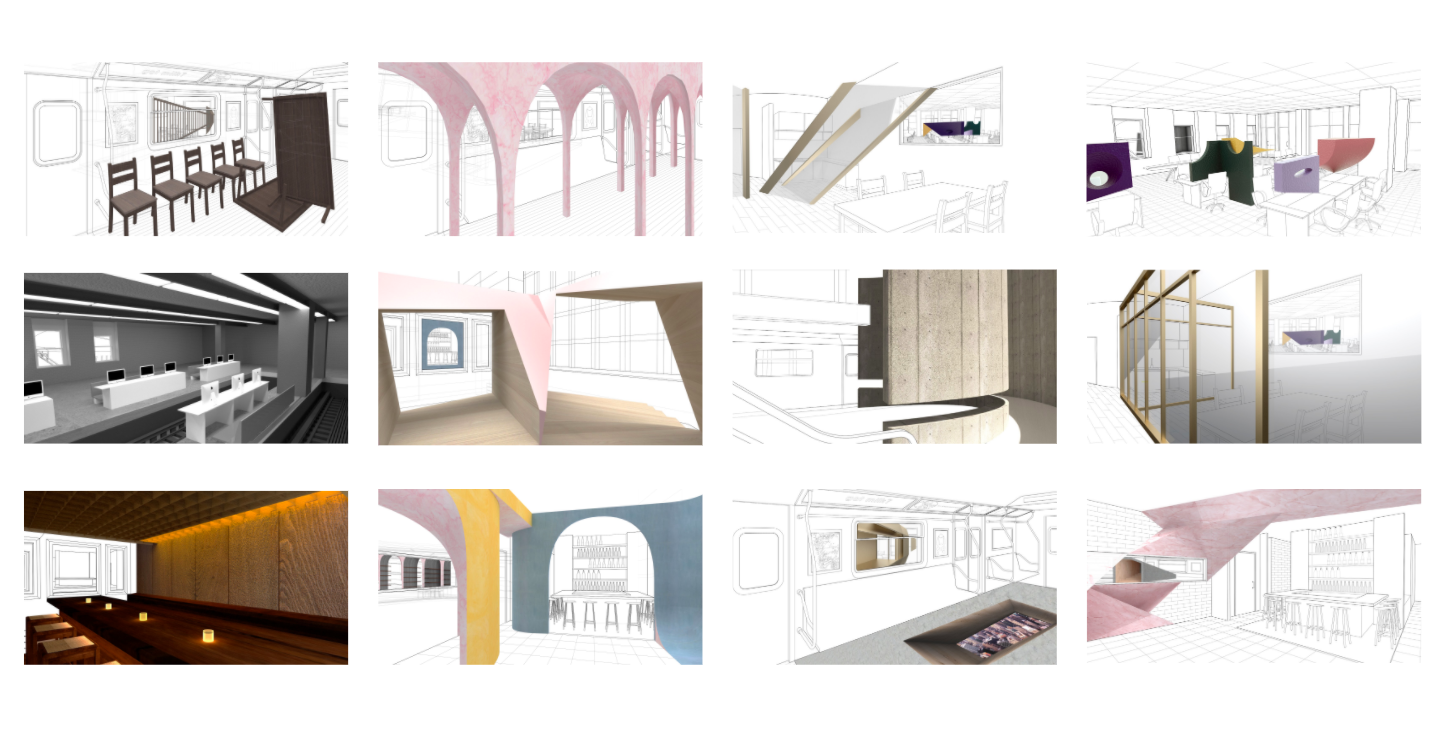
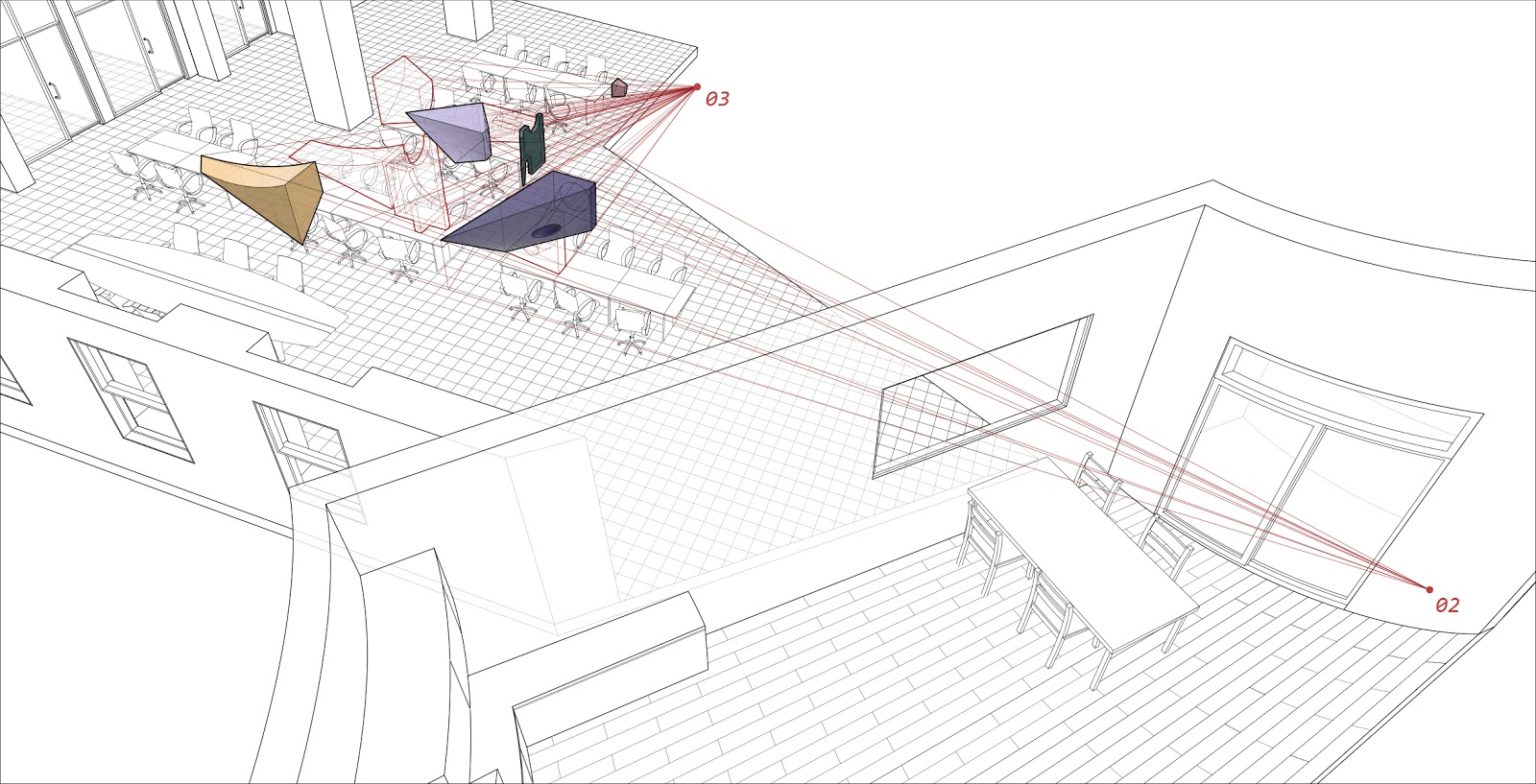
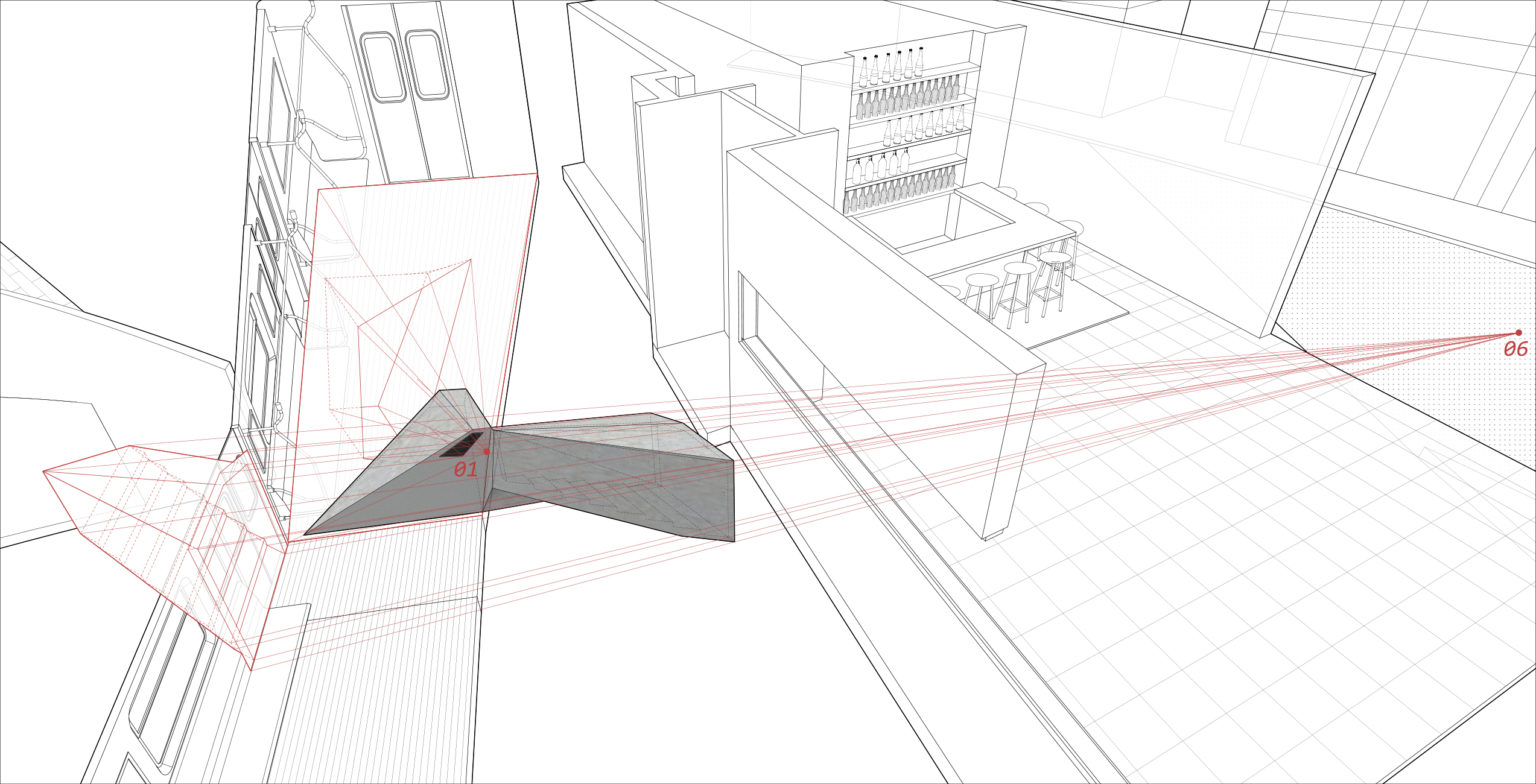
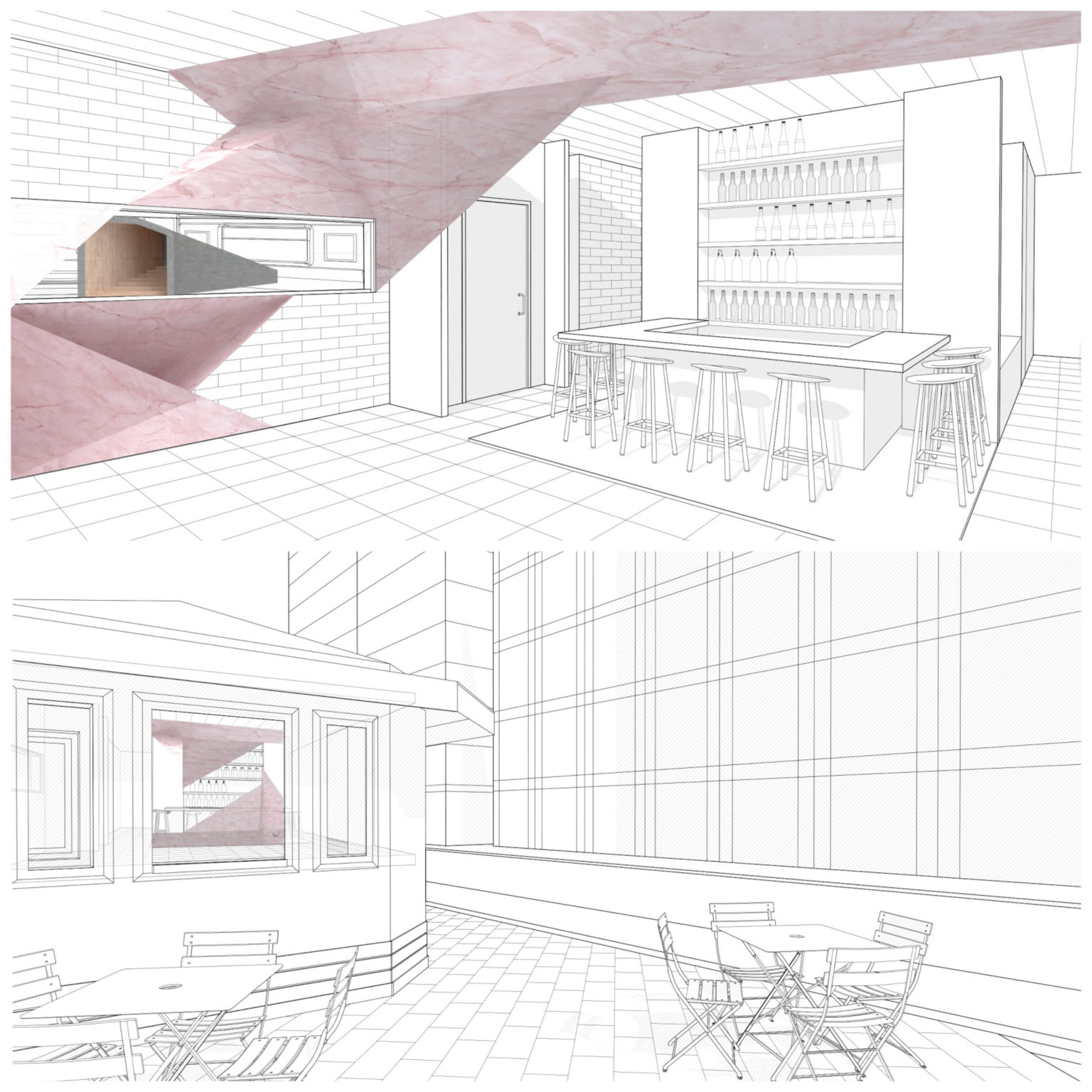
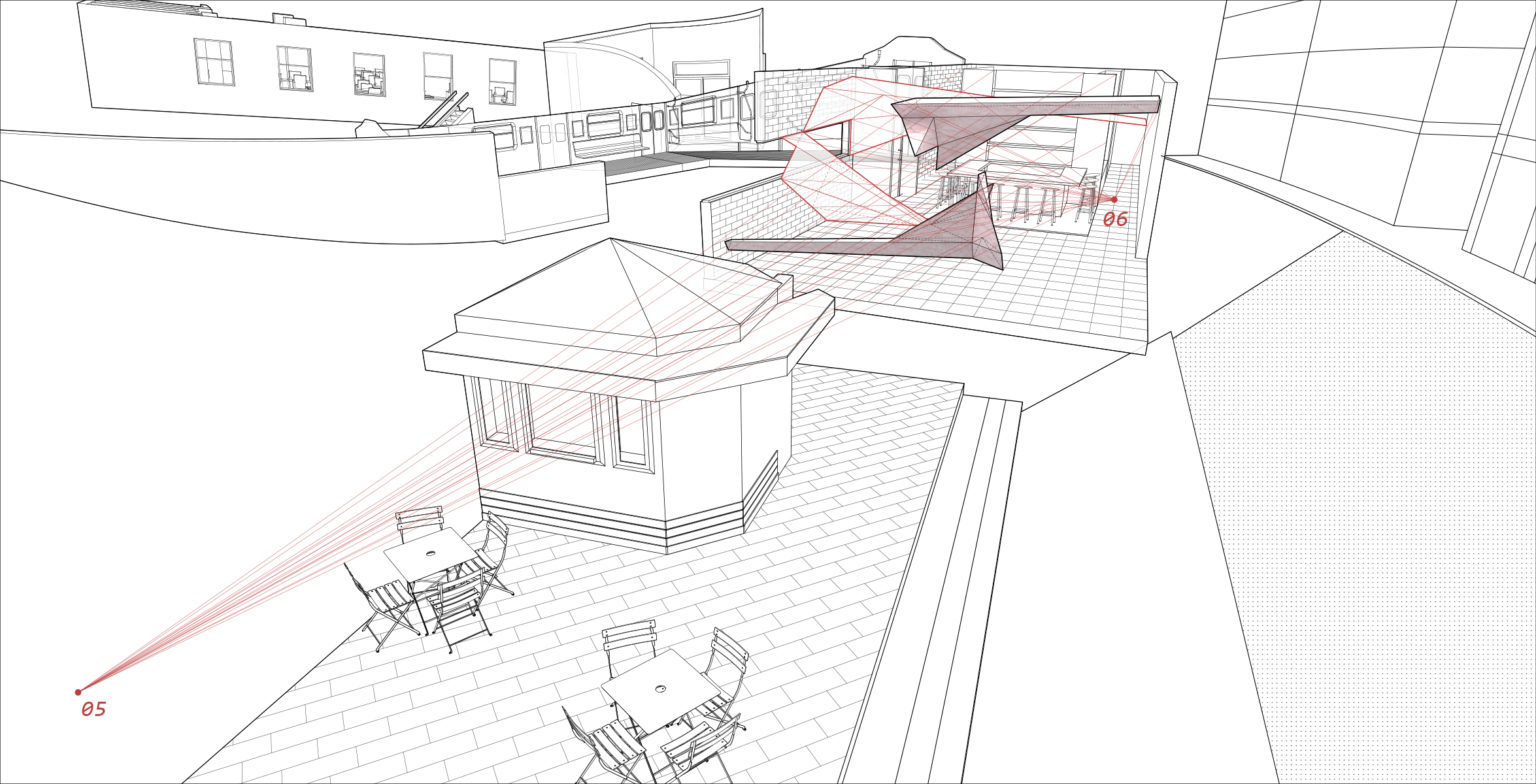
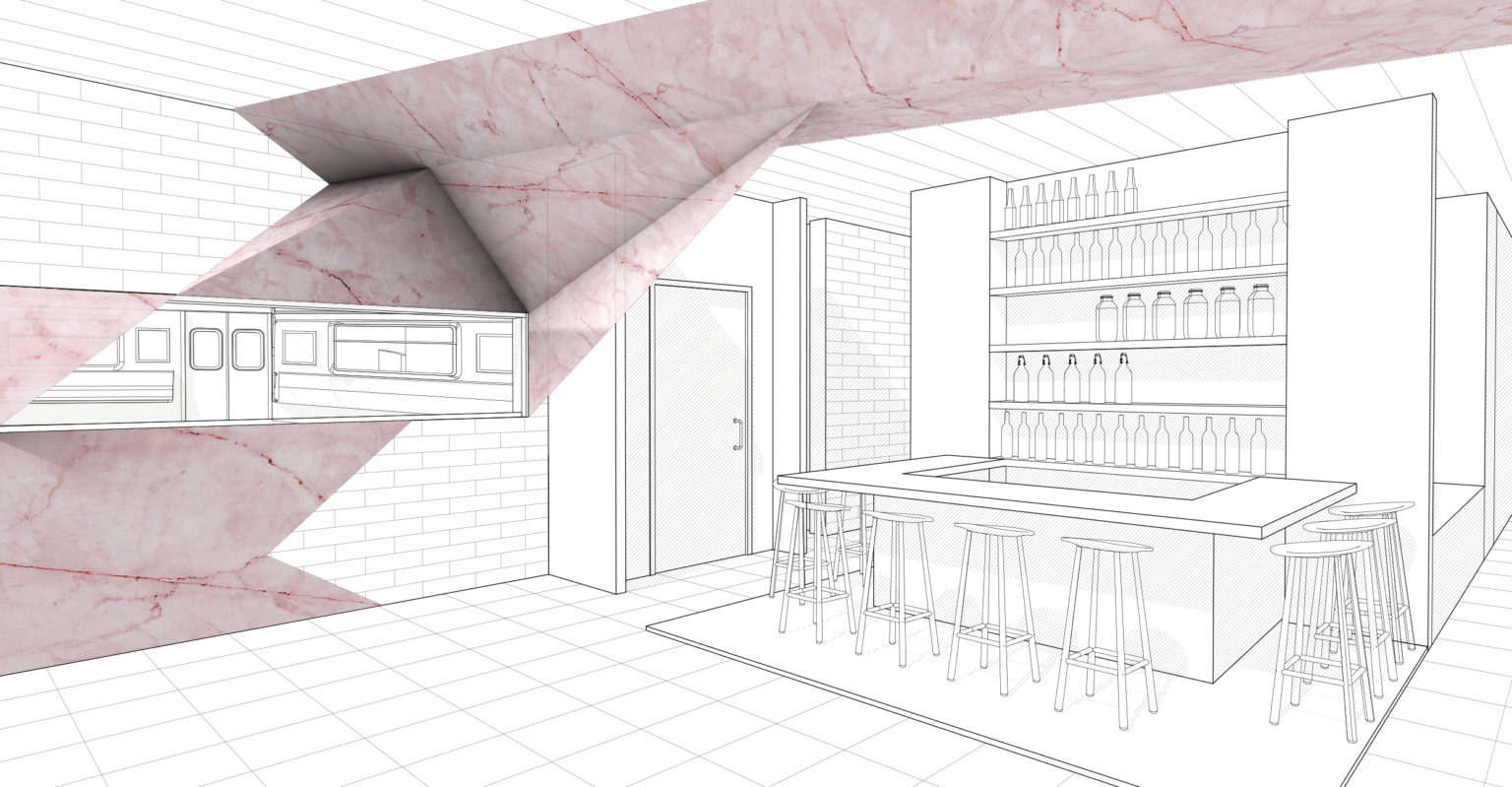
In the “Developed Surface†essay, Robin Evan discusses how objects don’t have an allegiance to a specific surface or orientation in terms of cartographic projections. He frames this as a problem he encountered while representing the projection of furniture in his drawings of flat unfolded interior elevations. Through the project, we are testing the design of virtual objects that reconcile multiple viewpoints using the view as something active rather than passive. The idea of the human view becomes crucial to our project as it starts to activate the construction of the projected realities. These objects can exist in two different realities, aligning to multiple viewpoints so that they start to re-evaluate and re-frame spaces differently.
Although the project isn’t oriented towards the technical aspects of constructing the virtual realm, this method has architectural implications and implies a new type of space derived from rethinking the boundary between the physical and virtual and exploring the conflation of the two. The experiment of projected realities made us interested in the question of what does the exclusive objects mean to people other than the specific viewers? What can the “backside†of these objects start to reveal? Our project begins to question this new kind of architecture which acts as a synthesis of both the fixed and projected realities as we start to rethink the boundary between the physical and virtual and the possibilities of both.
We constructed a set which appropriates a spatial sequence that exists in New York City as a prototypical site. A path in Midtown Manhattan along which a fictionalized routine of work and leisure takes place is broken up into fragments of spaces that are reconfigured and then linked through defined viewpoints. We believe that the understanding of architecture is also generated in discrete moments that accumulate into a coherent spatial experience. The set of the movie “Rear Window†used fragments of architecture to construct a whole world, and yet the experience of the spaces remained seamless. Spaces are rearranged to create strange spatial linkages − as if architecture becomes a stage set.
In the “Developed Surface†essay, Robin Evan discusses how objects don’t have an allegiance to a specific surface or orientation in terms of cartographic projections. He frames this as a problem he encountered while representing the projection of furniture in his drawings of flat unfolded interior elevations. Through the project, we are testing the design of virtual objects that reconcile multiple viewpoints using the view as something active rather than passive. The idea of the human view becomes crucial to our project as it starts to activate the construction of the projected realities. These objects can exist in two different realities, aligning to multiple viewpoints so that they start to re-evaluate and re-frame spaces differently.
Although the project isn’t oriented towards the technical aspects of constructing the virtual realm, this method has architectural implications and implies a new type of space derived from rethinking the boundary between the physical and virtual and exploring the conflation of the two. The experiment of projected realities made us interested in the question of what does the exclusive objects mean to people other than the specific viewers? What can the “backside†of these objects start to reveal? Our project begins to question this new kind of architecture which acts as a synthesis of both the fixed and projected realities as we start to rethink the boundary between the physical and virtual and the possibilities of both.