THE INNER LIVES OF MONUMENTS
Winston (Wen) Chen
link to my resumé and portfolios
https://issuu.com/winstonchen91?issuu_product=header&issuu_subproduct=upgrade&issuu_context=link&issuu_cta=profile
Project Introduction
“Permanences ... can be considered propelling elements... that enable us to understand the city in its totality, or ...pathological elements ... virtually isolated in the city.”
--- Aldo Rossi, The Architecture of the City
“The opaque is not the obscure, though it is possible for it to be so and be accepted as such. It is that which cannot be reduced, which is the most perennial guarantee of participation and confluence.”
---- Edouard Glissant, “For Opacity,” in Poetics of Relation
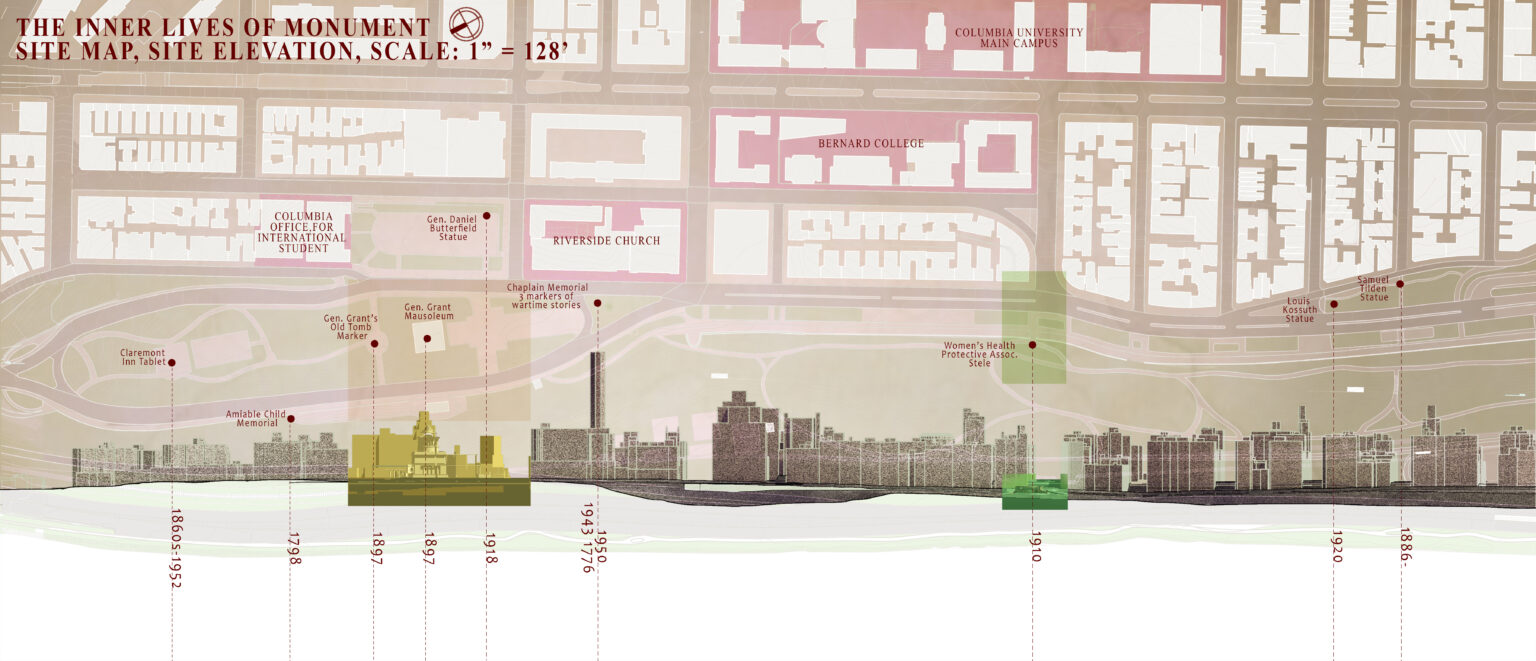
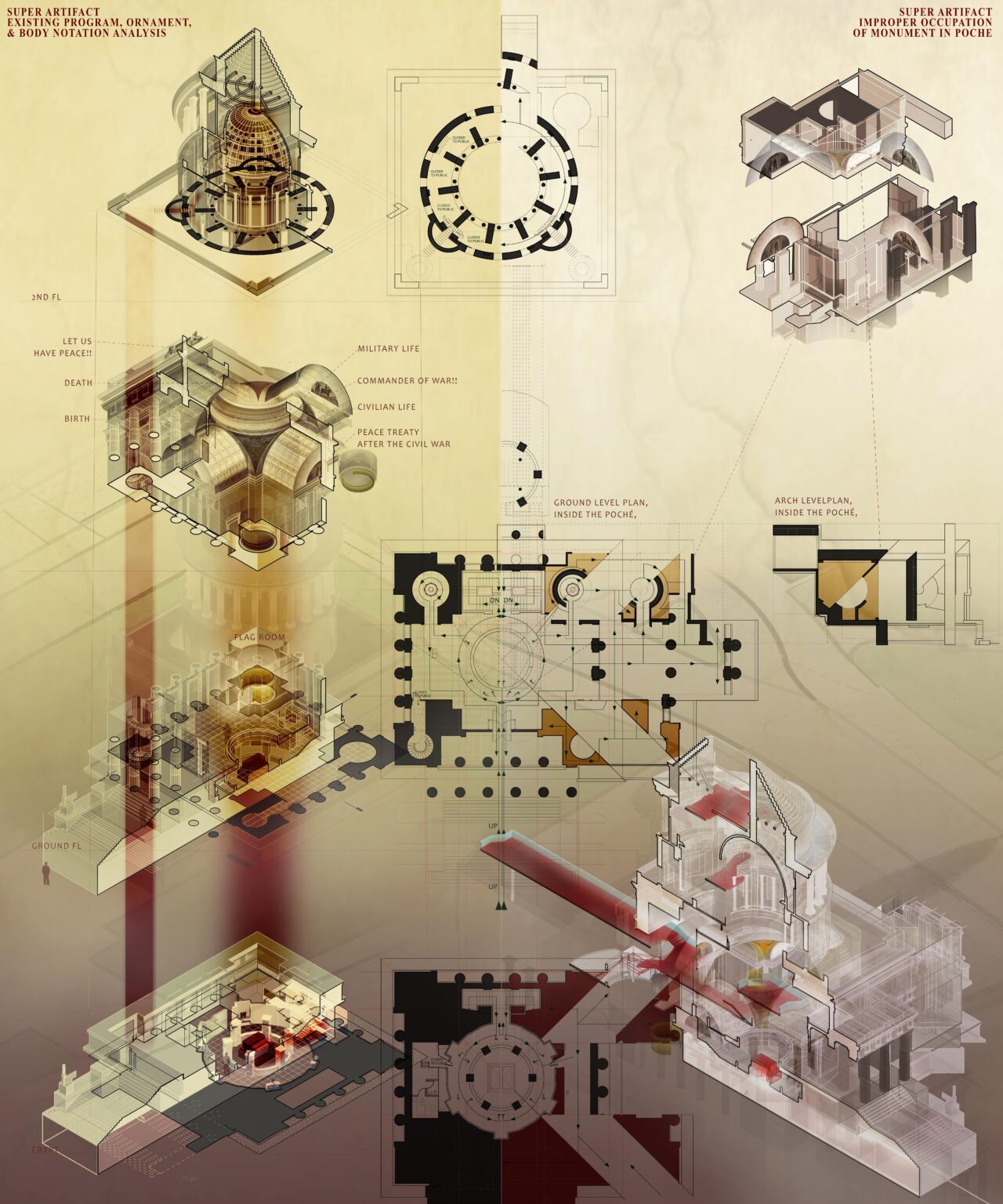
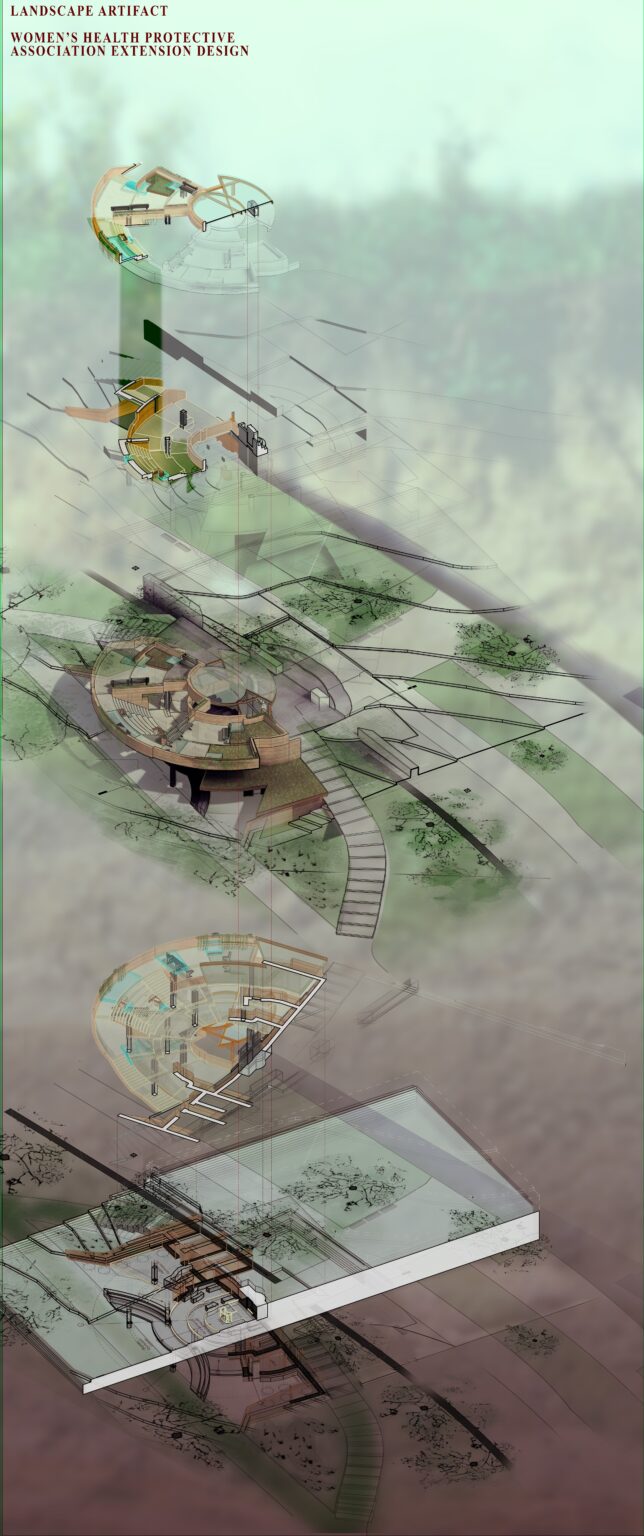
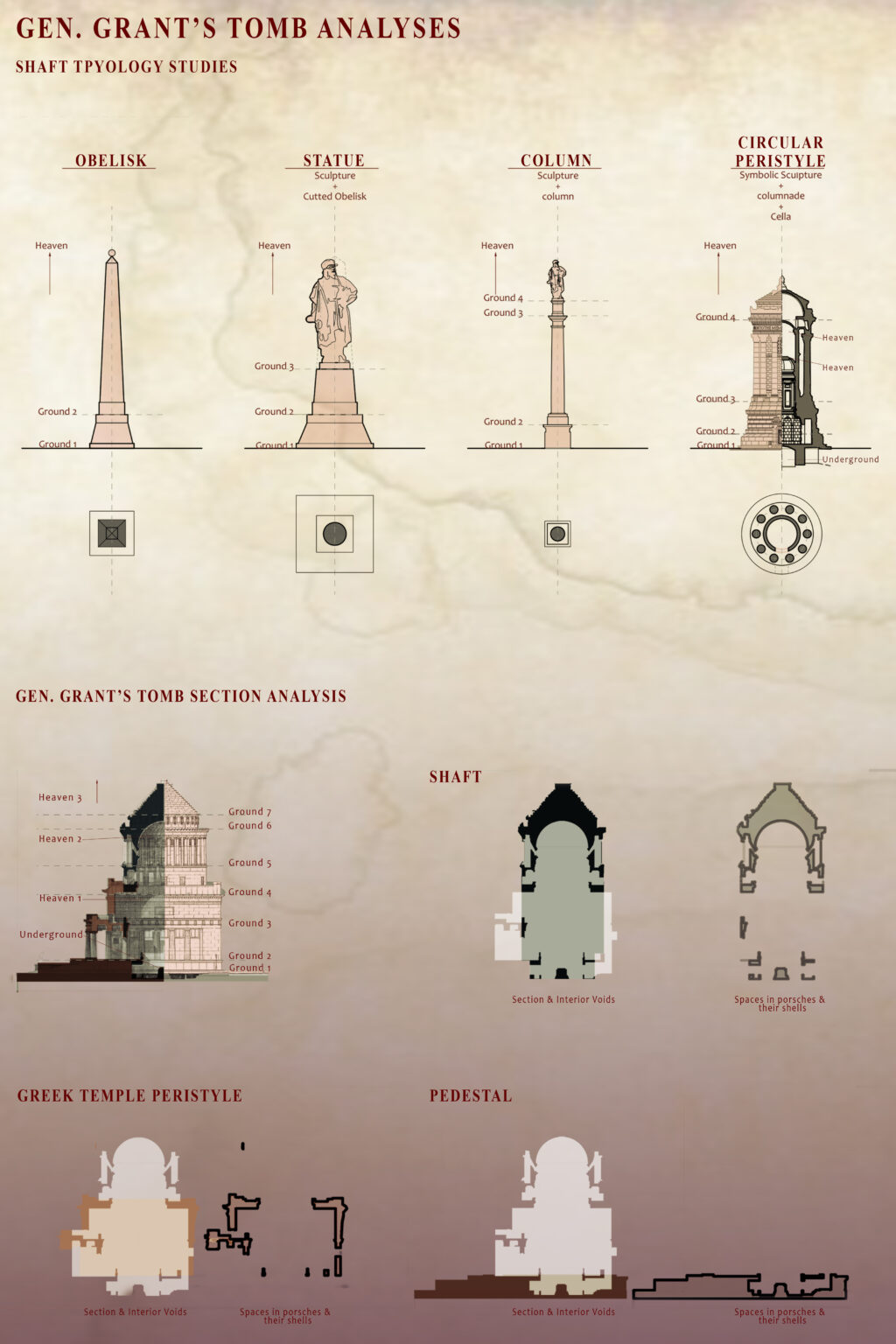
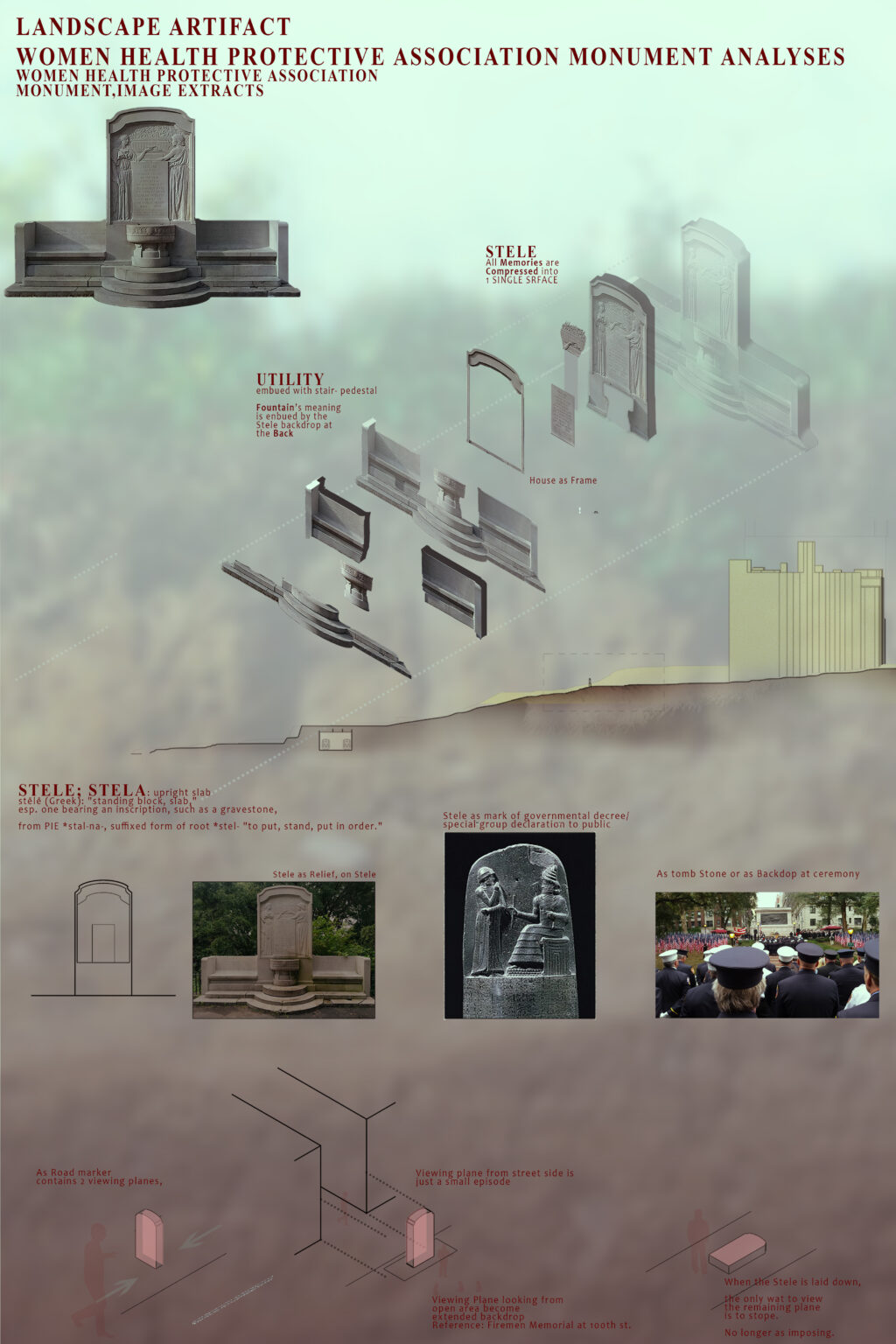
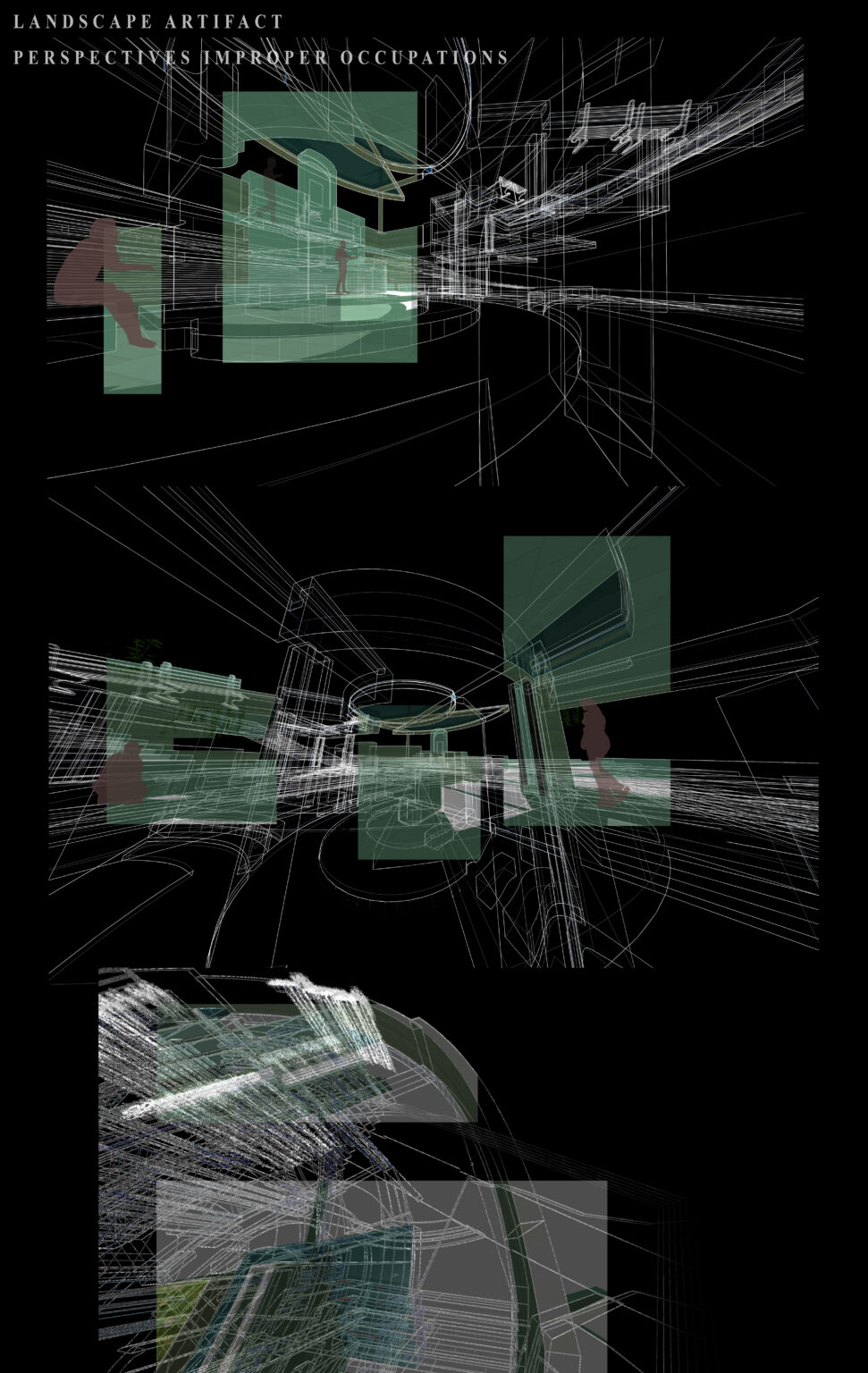
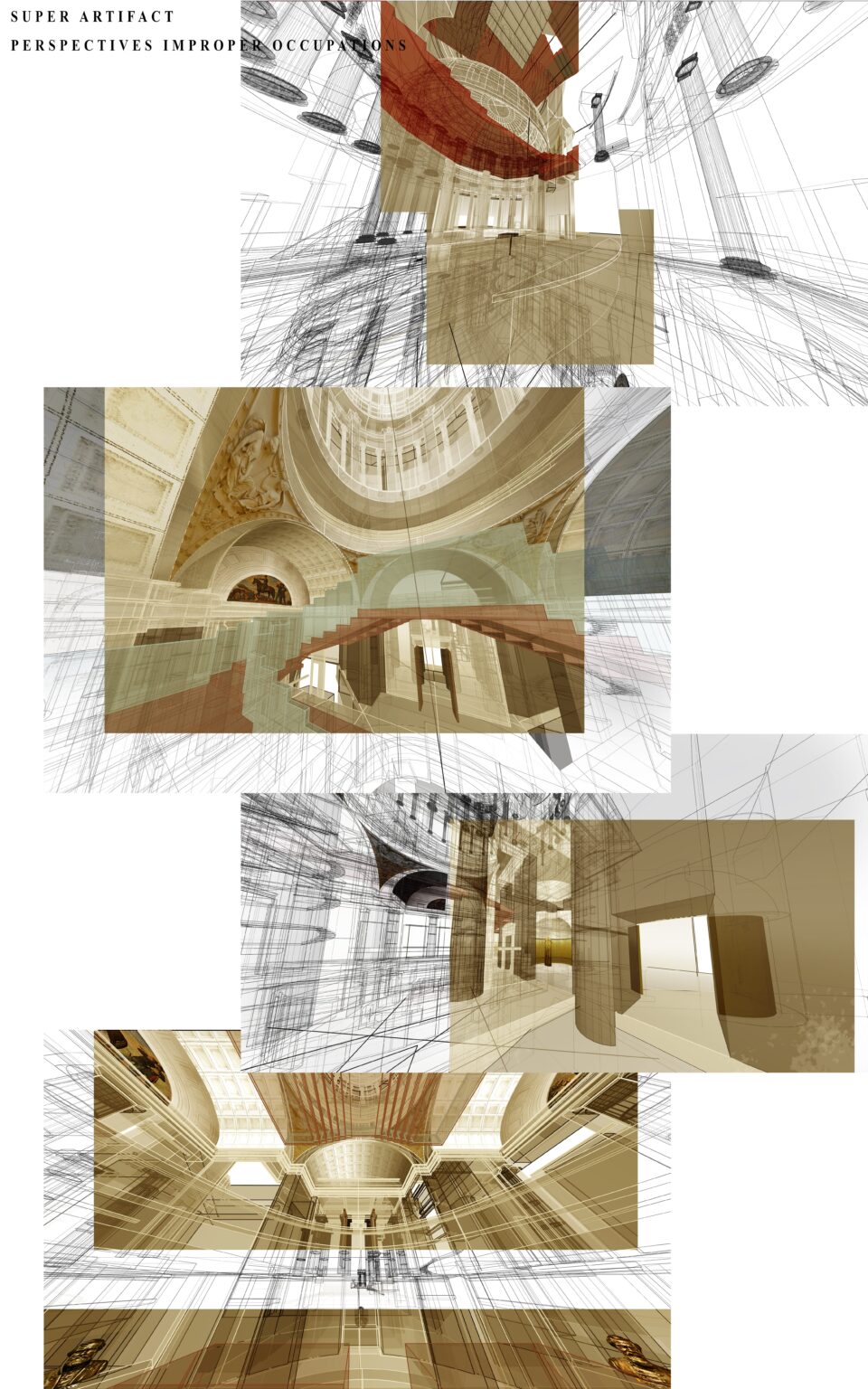
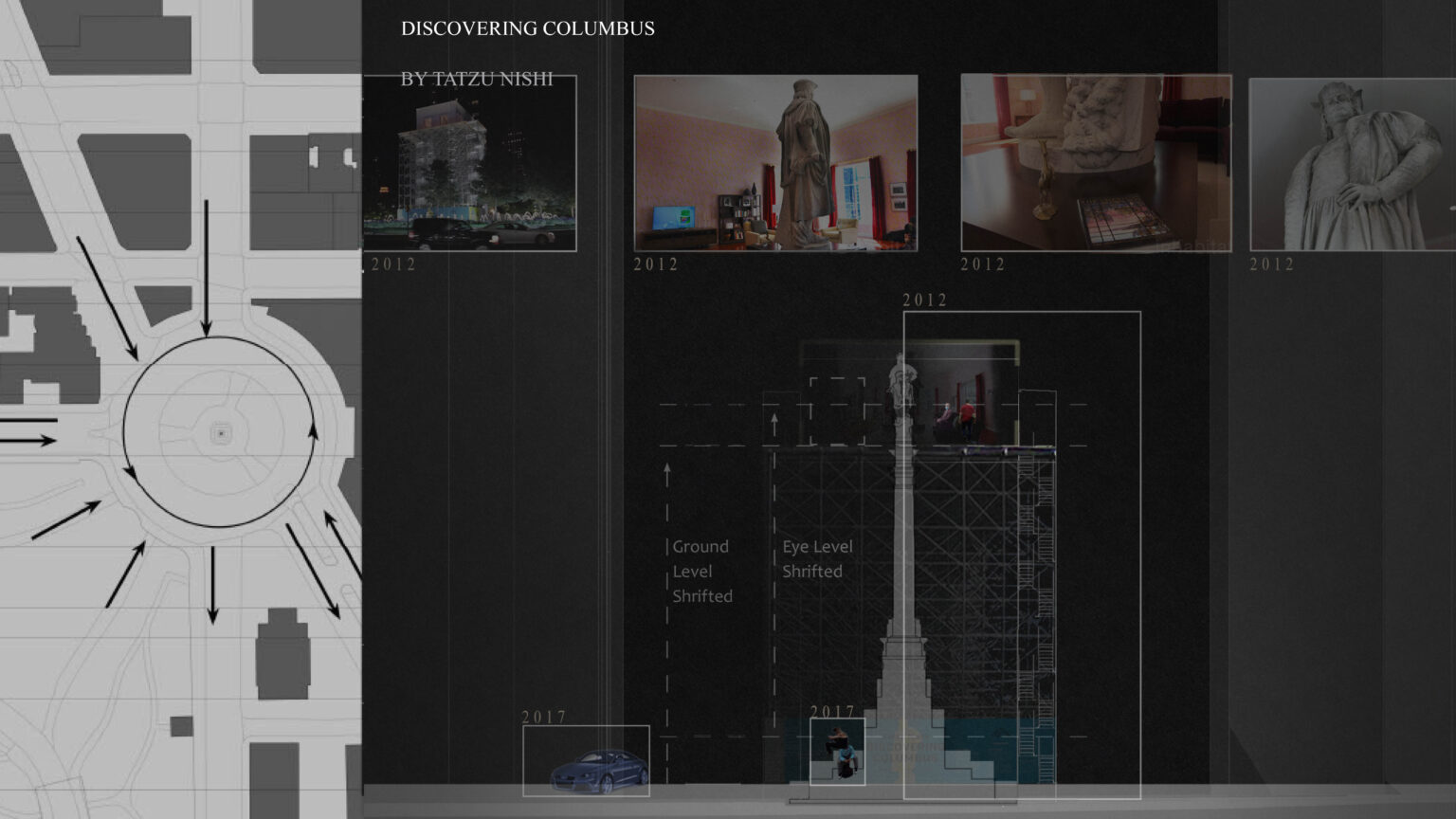
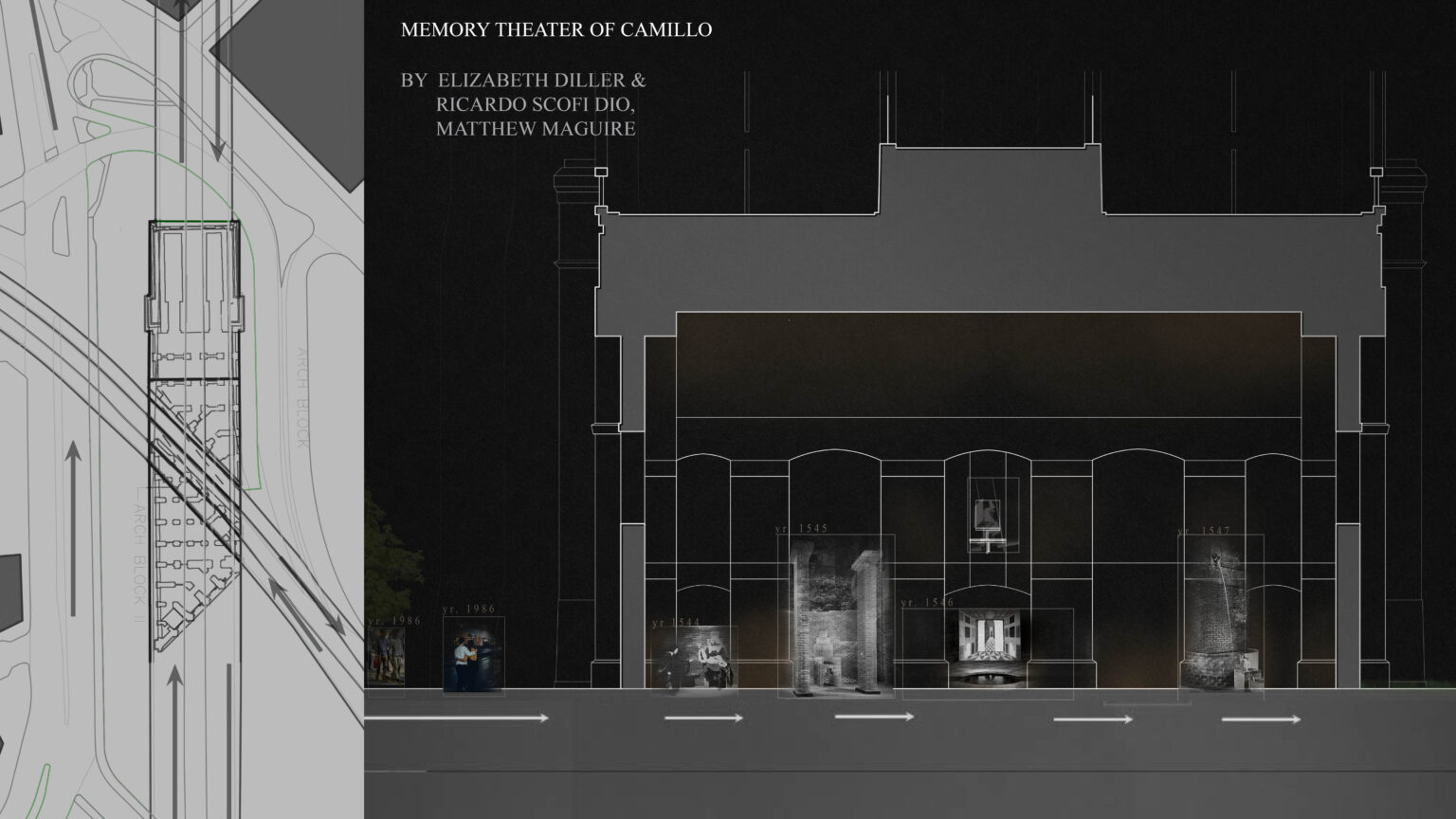
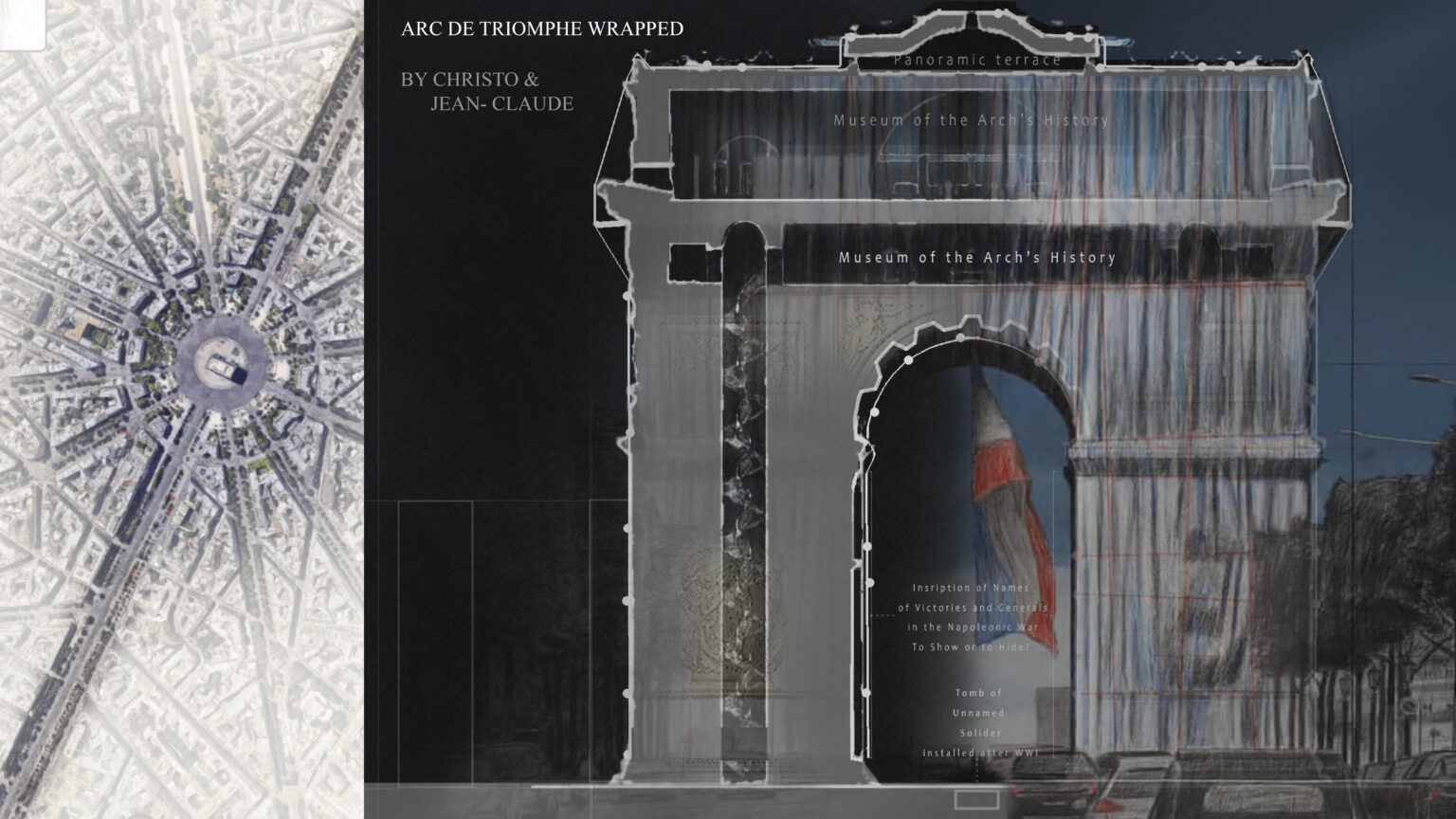
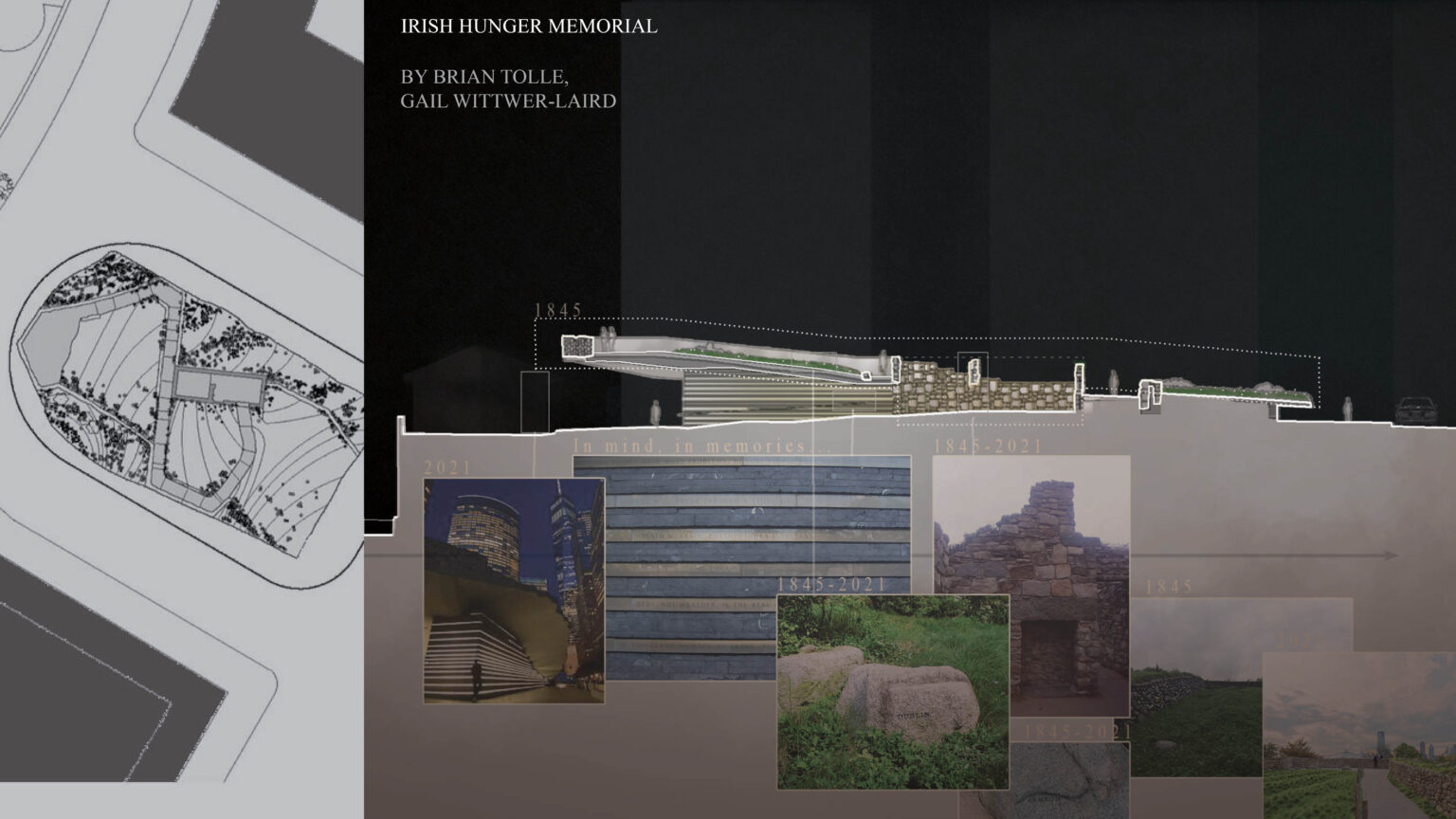
We propose “Enigmatic Monuments” to open up, deconstruct, and expand existing monumental sites in order to engage visitors and community members in new ways of historical thinking. Embodied relations with the shells and interiors of these sites will be transformed in order to bring about new ways of thinking about community and division, publicity and privacy, and transparency and opacity. The initial project will reactivate a series of historic but relatively ignored or forgotten monuments in Riverside Park, West Harlem, New York, focusing first on General Grant’s Tomb as a large-scale, architectural Super Artifact Monument and the Women’s Health Protective Association Monument as a smaller, more sculptural and landscape-oriented Ground Artifact Monument.
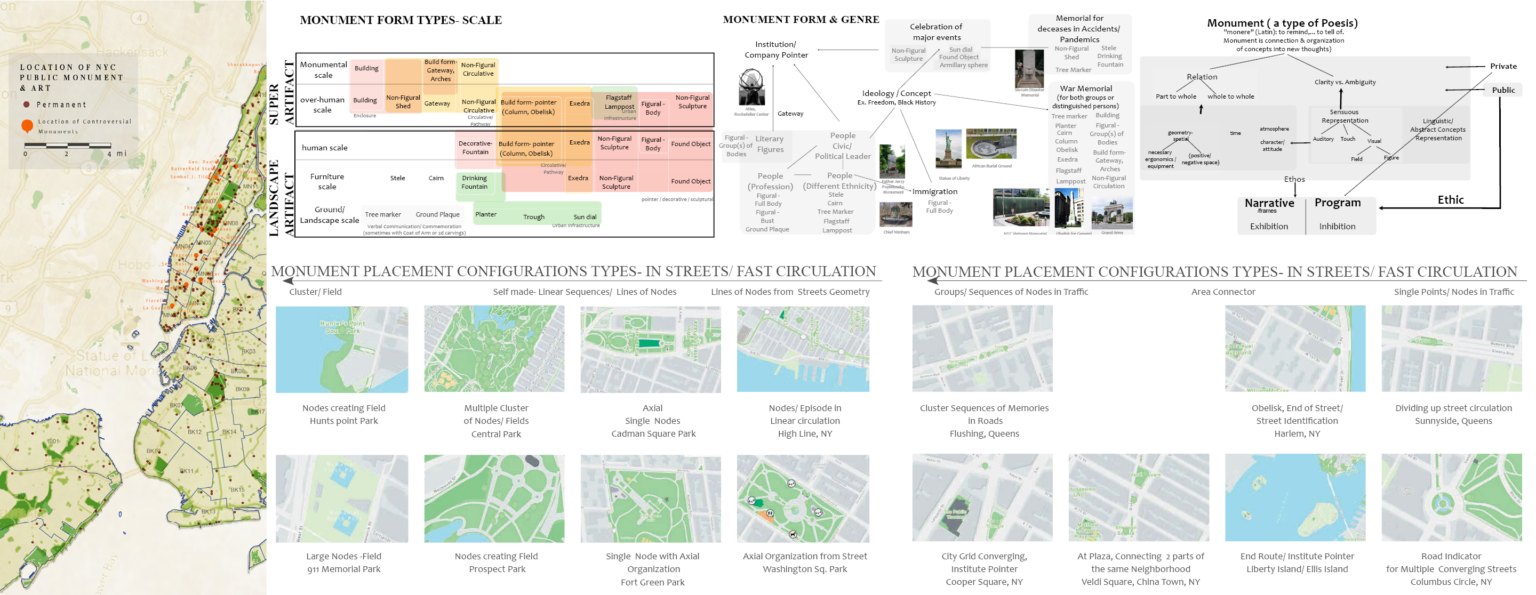
Monuments are revered containers of past official narratives. However, in the current age of mass media and political polarization, they are increasingly forgotten, neglected, or charged with controversy. Whereas controversial monuments become sites for disagreements about different official narratives, forgotten and ignored monuments often get neglected even when the memories and histories they represent remain important, as memories and histories connected to present issues are frequently not cared for or remembered. Examining this varied collective typology of monuments as a whole, and especially the ones that have been forgotten can allow us to understand our history more deeply and develop new directions for the future.
Although aiming to preserve official or dominant narratives about history, attempts to isolate monuments from everyday life often create temporal ruptures in the urban landscape by eliminating the intermediary bridges between the distant past and the present. This separation of monuments from the rest of the city is the opposite of preserving history’s spirit for the present. Instead of letting monuments become what Rossi called “pathological” artifacts in the city, “The Inner Lives of Monuments” theorizes possible methods of transforming them into “propelling” artifacts that can reconcile relations between the present and the past as well as the official and the everyday.
--- Aldo Rossi, The Architecture of the City
“The opaque is not the obscure, though it is possible for it to be so and be accepted as such. It is that which cannot be reduced, which is the most perennial guarantee of participation and confluence.”
---- Edouard Glissant, “For Opacity,” in Poetics of Relation
We propose “Enigmatic Monuments” to open up, deconstruct, and expand existing monumental sites in order to engage visitors and community members in new ways of historical thinking. Embodied relations with the shells and interiors of these sites will be transformed in order to bring about new ways of thinking about community and division, publicity and privacy, and transparency and opacity. The initial project will reactivate a series of historic but relatively ignored or forgotten monuments in Riverside Park, West Harlem, New York, focusing first on General Grant’s Tomb as a large-scale, architectural Super Artifact Monument and the Women’s Health Protective Association Monument as a smaller, more sculptural and landscape-oriented Ground Artifact Monument.
Monuments are revered containers of past official narratives. However, in the current age of mass media and political polarization, they are increasingly forgotten, neglected, or charged with controversy. Whereas controversial monuments become sites for disagreements about different official narratives, forgotten and ignored monuments often get neglected even when the memories and histories they represent remain important, as memories and histories connected to present issues are frequently not cared for or remembered. Examining this varied collective typology of monuments as a whole, and especially the ones that have been forgotten can allow us to understand our history more deeply and develop new directions for the future.
Although aiming to preserve official or dominant narratives about history, attempts to isolate monuments from everyday life often create temporal ruptures in the urban landscape by eliminating the intermediary bridges between the distant past and the present. This separation of monuments from the rest of the city is the opposite of preserving history’s spirit for the present. Instead of letting monuments become what Rossi called “pathological” artifacts in the city, “The Inner Lives of Monuments” theorizes possible methods of transforming them into “propelling” artifacts that can reconcile relations between the present and the past as well as the official and the everyday.
Manifesto: 9 Points of Enigmatic Monumentality
1) The meanings of monuments change over time. Therefore, monuments must be protean, ambiguous, and complex.
2) We are against Modernist clarity and transparency because they often obscure truth and complexity by forced reductions while pretending to achieve the opposite.
3) We are against Modernist Neutrality, because Modernist Neutrality takes a position while pretending not to, thus often representing forms of “bad faith,” deception, or fakeness.
4) Histories, memories, and lived experience living can merge into sustainable mutual understandings only by acknowledging the conflicts and finding commonalities between the voices and characters of multiple different publics
5) Enigmatic Monuments reveal different orientations by showing relations between the design’s interior and shell. In this way, we show that the monuments’ opacity is not the same as obscurity, but is rather a form of ethical ambiguity that is kept undefined in order to allow for more layered understandings.
6) Enigmatic Monuments are against the propagation of single official narratives that mutes the multiplicity of different voices. At the same time, they use selective silence and limited revelations to let each visitor and community member construct new judgments and uses, thus guarding the profundity and multiplicity of different meanings.
7) Enigmatic Monuments will not reinforce fixed programs and sequence of use. Instead, they allow unexpected events and new rituals to develop.
8) Enigmatic Monuments are protean. They are temporary before they are permanent. When they are permanent, they are ready to accept temporary additions and transformations.
9) Enigmatic Monuments are cathartic phenomena. They can be simultaneously joyous and somber; glorious and repenting; specific and ambiguous; beautiful and ugly; arrière-garde and avant-garde.
2) We are against Modernist clarity and transparency because they often obscure truth and complexity by forced reductions while pretending to achieve the opposite.
3) We are against Modernist Neutrality, because Modernist Neutrality takes a position while pretending not to, thus often representing forms of “bad faith,” deception, or fakeness.
4) Histories, memories, and lived experience living can merge into sustainable mutual understandings only by acknowledging the conflicts and finding commonalities between the voices and characters of multiple different publics
5) Enigmatic Monuments reveal different orientations by showing relations between the design’s interior and shell. In this way, we show that the monuments’ opacity is not the same as obscurity, but is rather a form of ethical ambiguity that is kept undefined in order to allow for more layered understandings.
6) Enigmatic Monuments are against the propagation of single official narratives that mutes the multiplicity of different voices. At the same time, they use selective silence and limited revelations to let each visitor and community member construct new judgments and uses, thus guarding the profundity and multiplicity of different meanings.
7) Enigmatic Monuments will not reinforce fixed programs and sequence of use. Instead, they allow unexpected events and new rituals to develop.
8) Enigmatic Monuments are protean. They are temporary before they are permanent. When they are permanent, they are ready to accept temporary additions and transformations.
9) Enigmatic Monuments are cathartic phenomena. They can be simultaneously joyous and somber; glorious and repenting; specific and ambiguous; beautiful and ugly; arrière-garde and avant-garde.