Bi-Vectored Sightlines
Kindergarten & Market Hybridized in Chongqing, China
By Yiruo Li - ylix17@pratt.edu / Yuanming Ma - ymax2@pratt.edu
Degree Project | Spring 2020 | Studio Critics: Ostap Rudakevych / Tulay Atak / Timothy Simonds
This thesis project aims to challenge the historically theorized conception of surveillance, furthermore redefines and utilizes surveillance as an active vector through the language and configuration of architecture.
We define surveillance as an active rather than a passive action. It is a concurrent movement rather than a passive and asynchronous reaction capturing by surveillance cameras. Within the urban context, we also utilize it to address the cross-generational relationships on site.
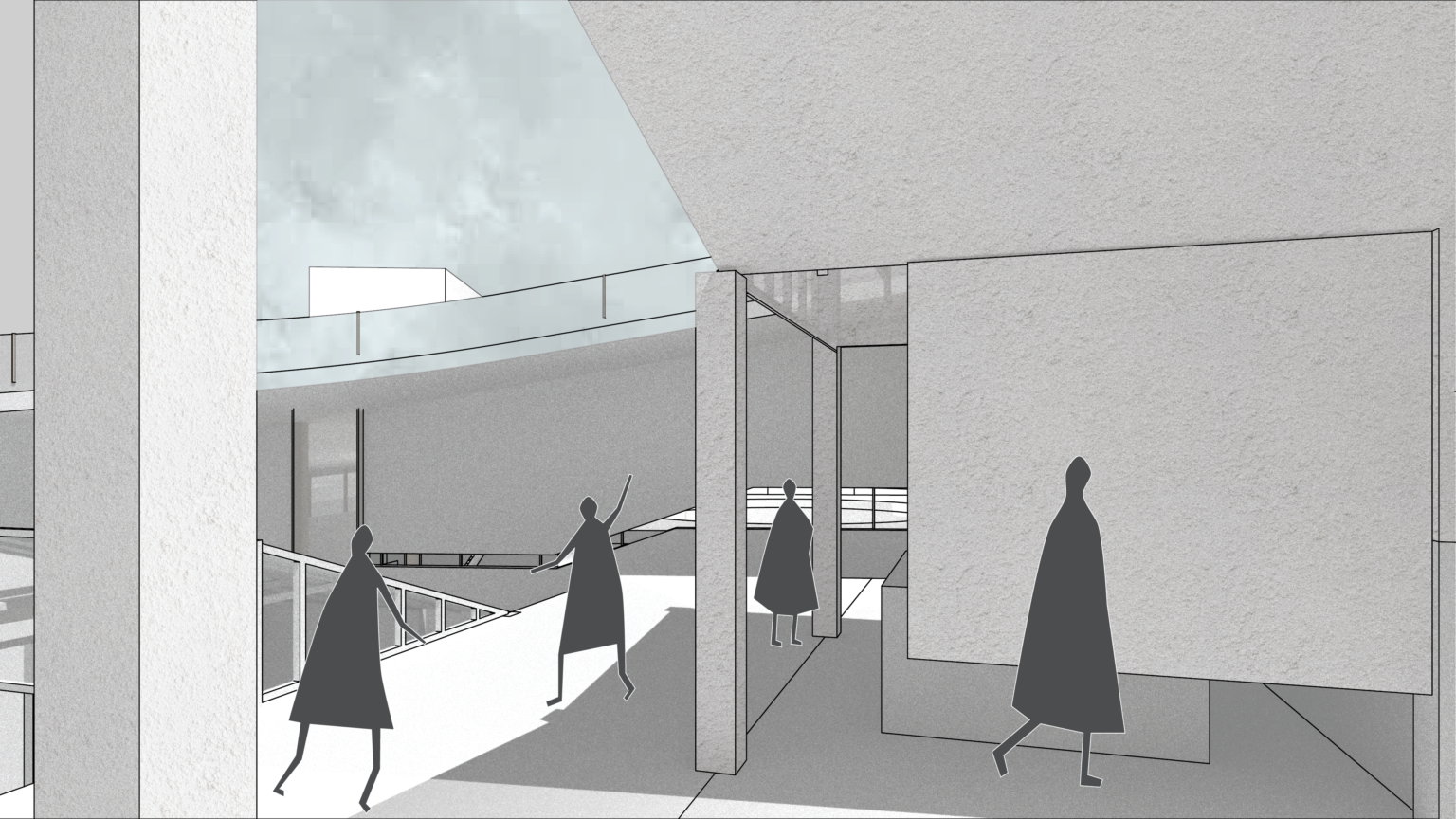
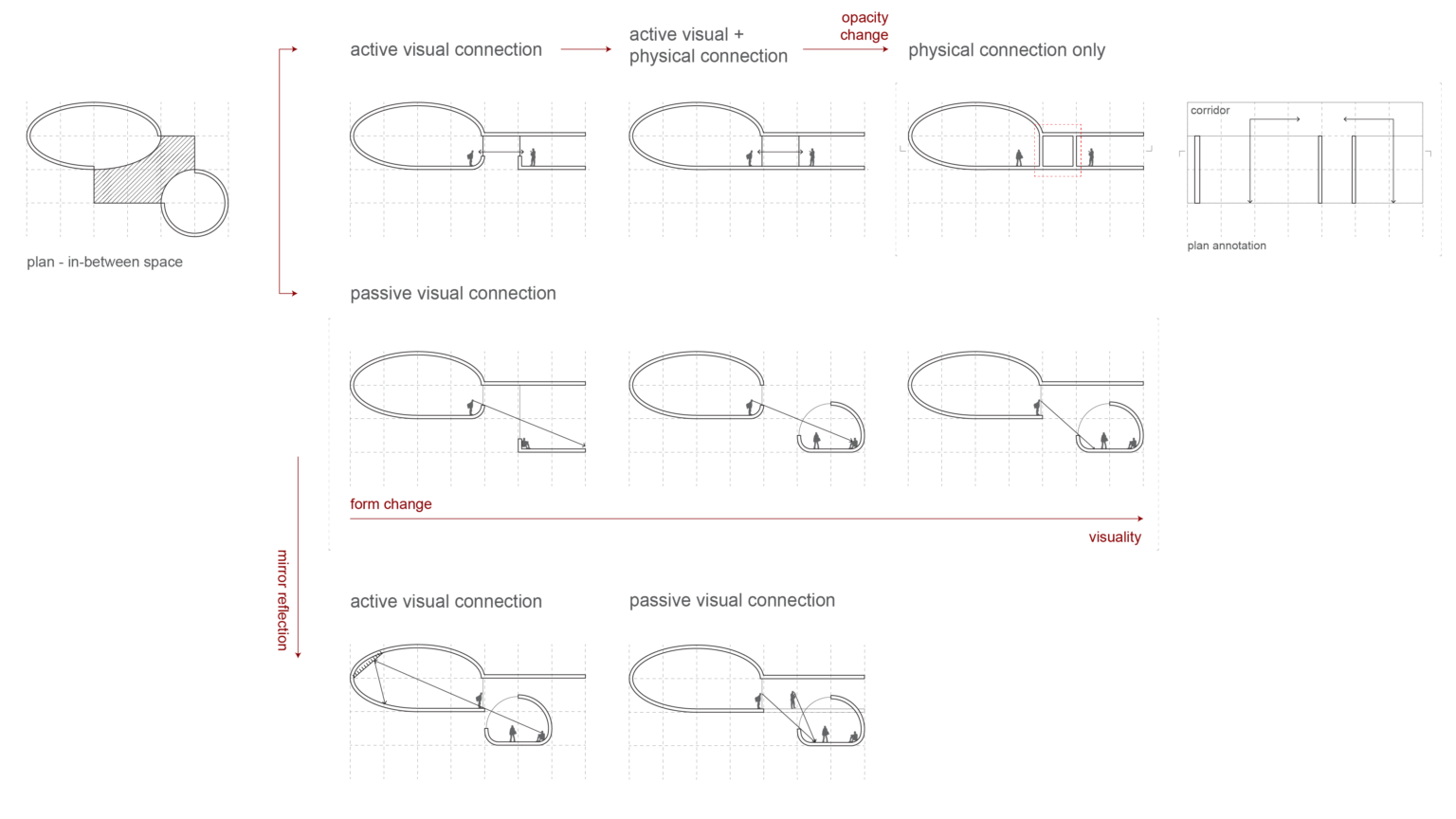
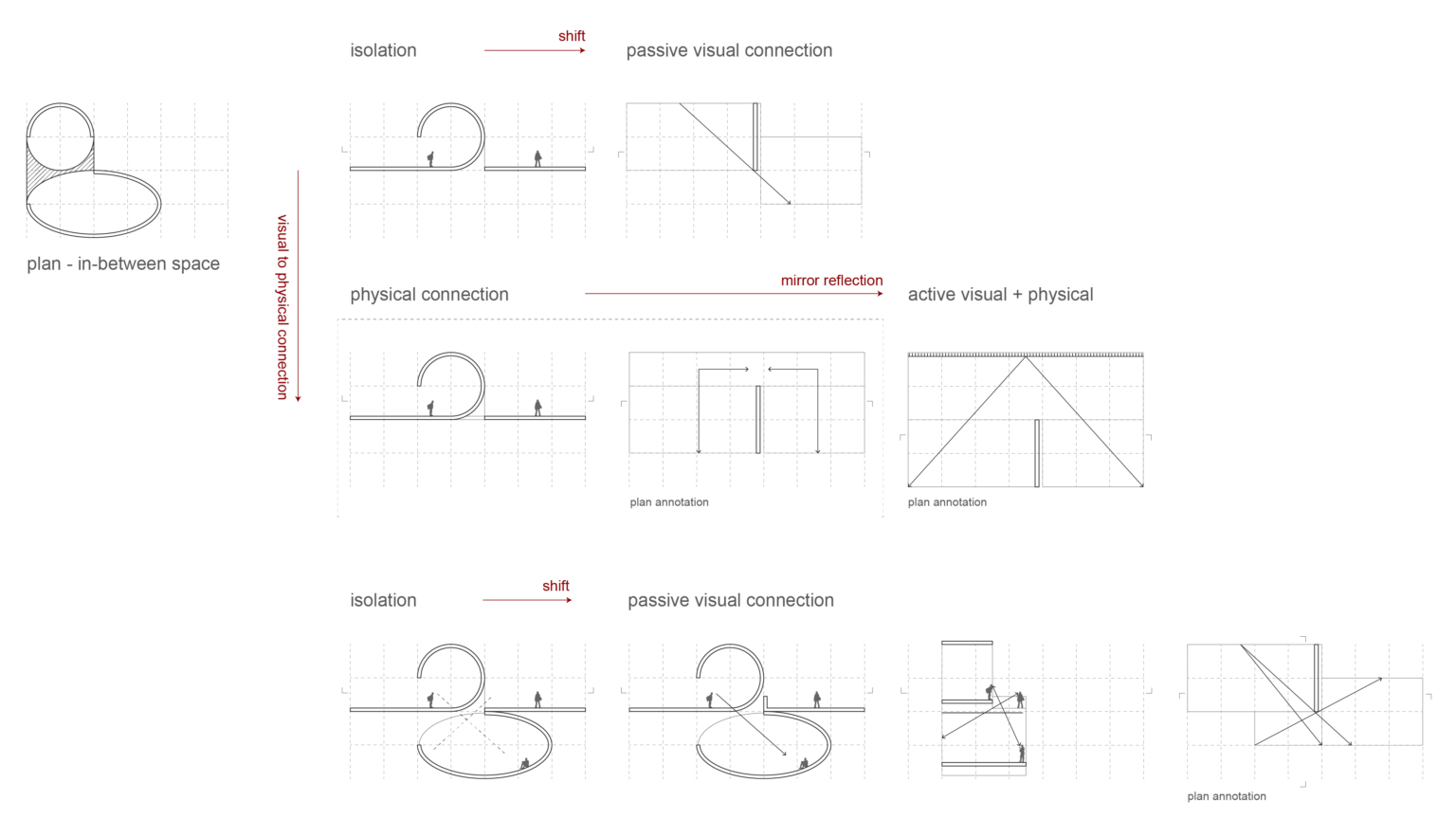
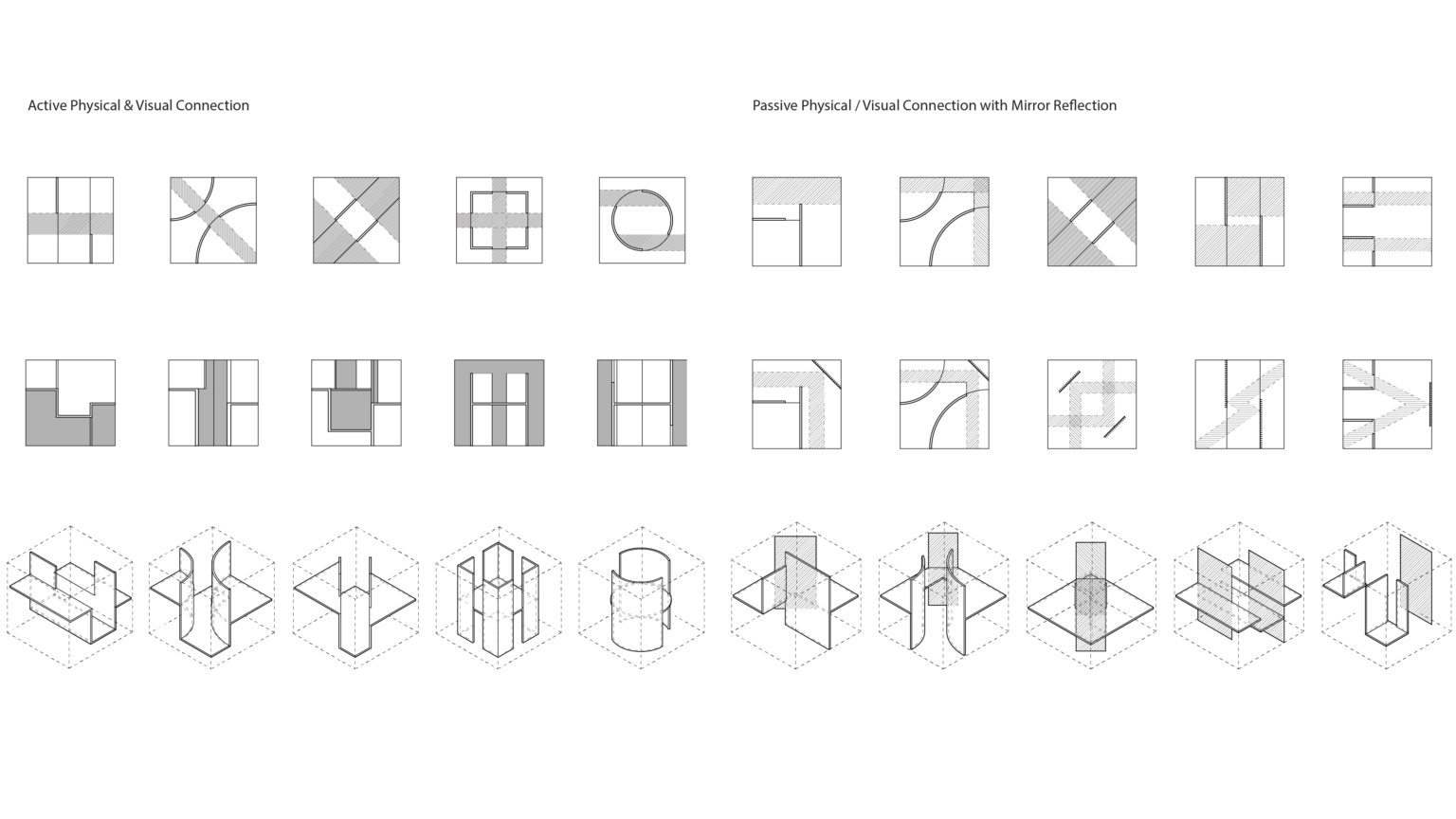
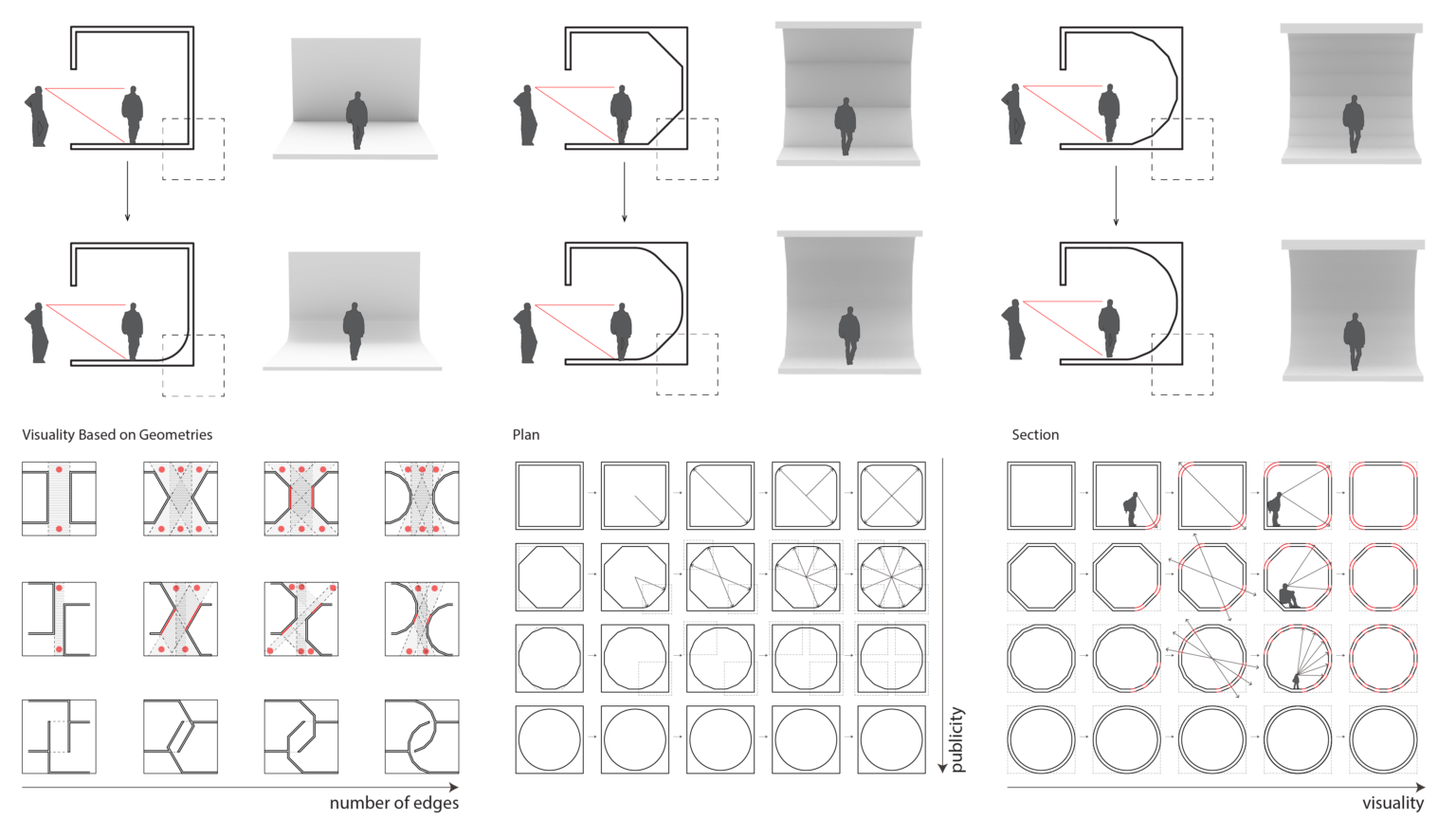
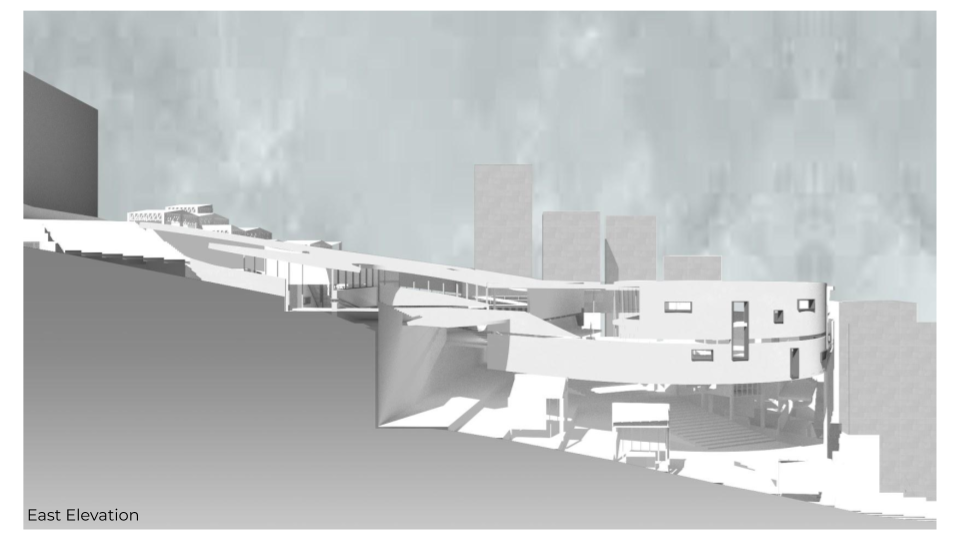
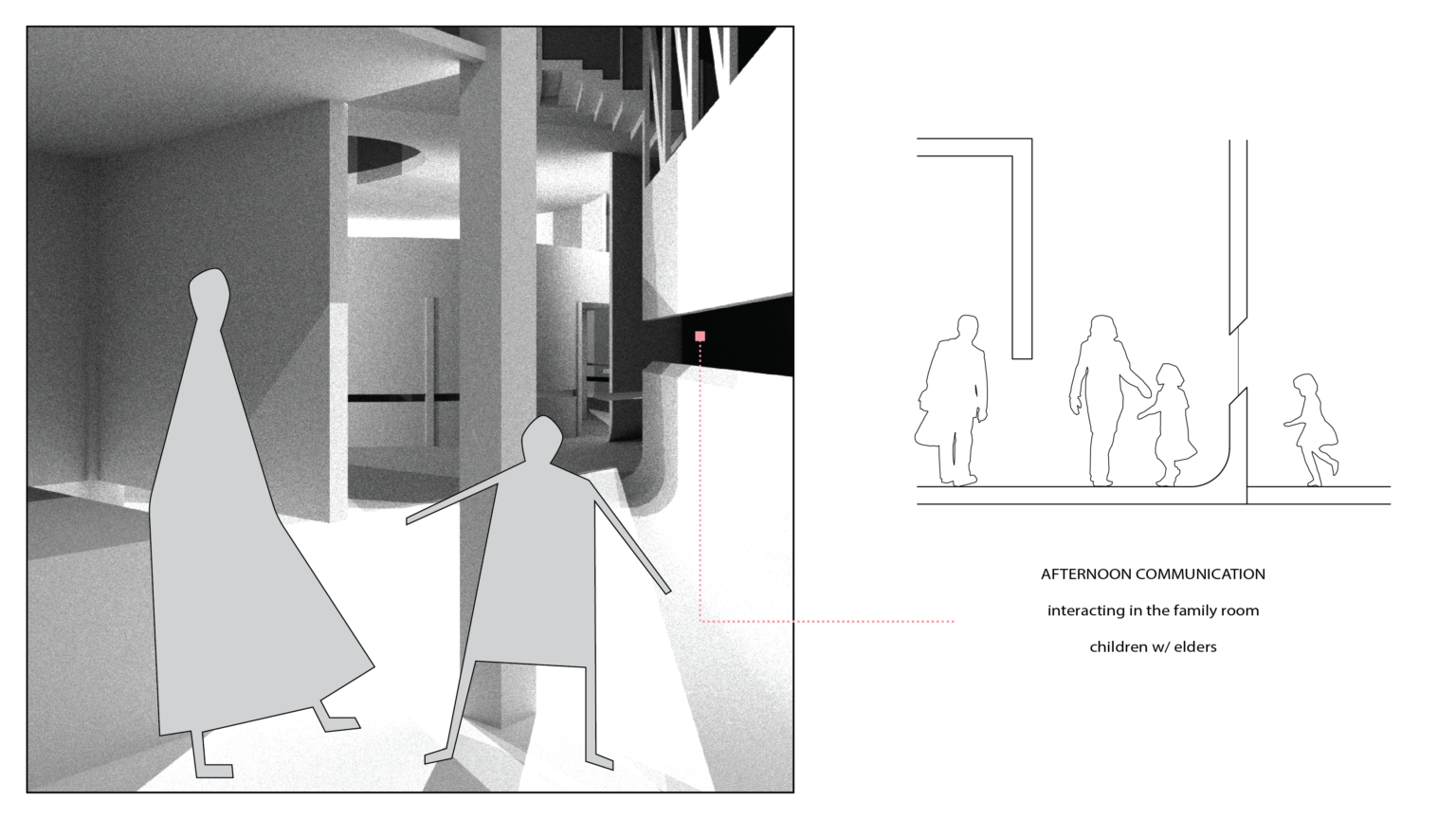
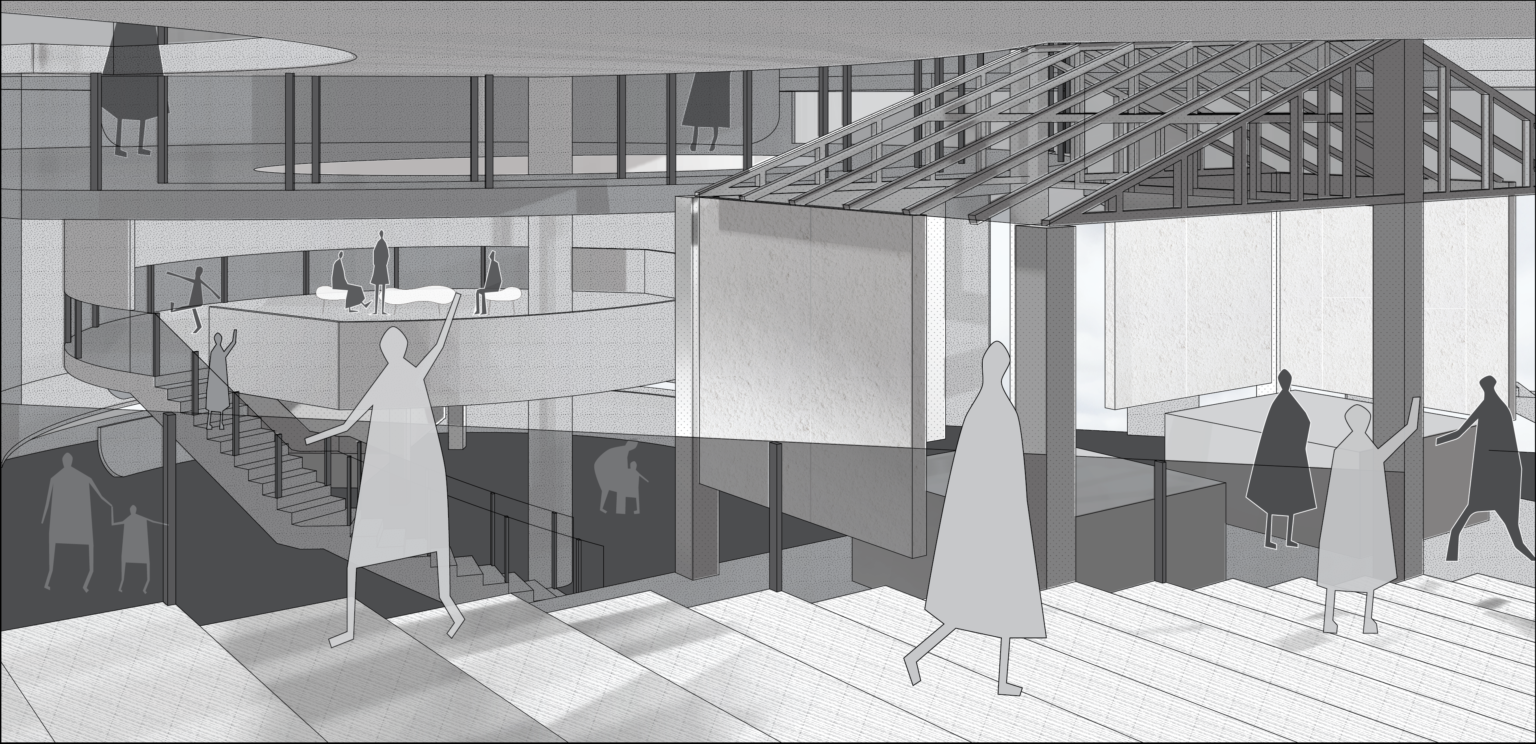
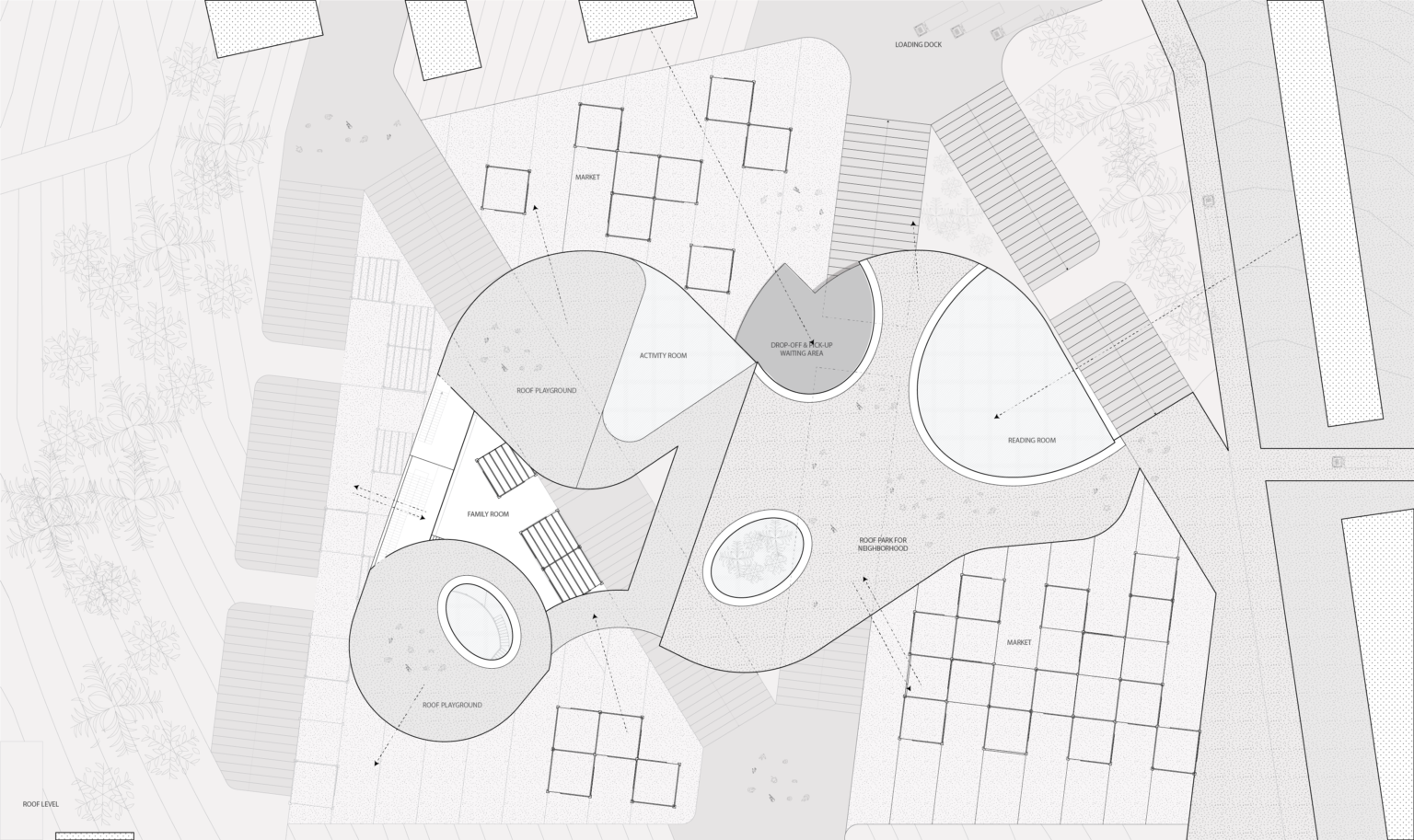
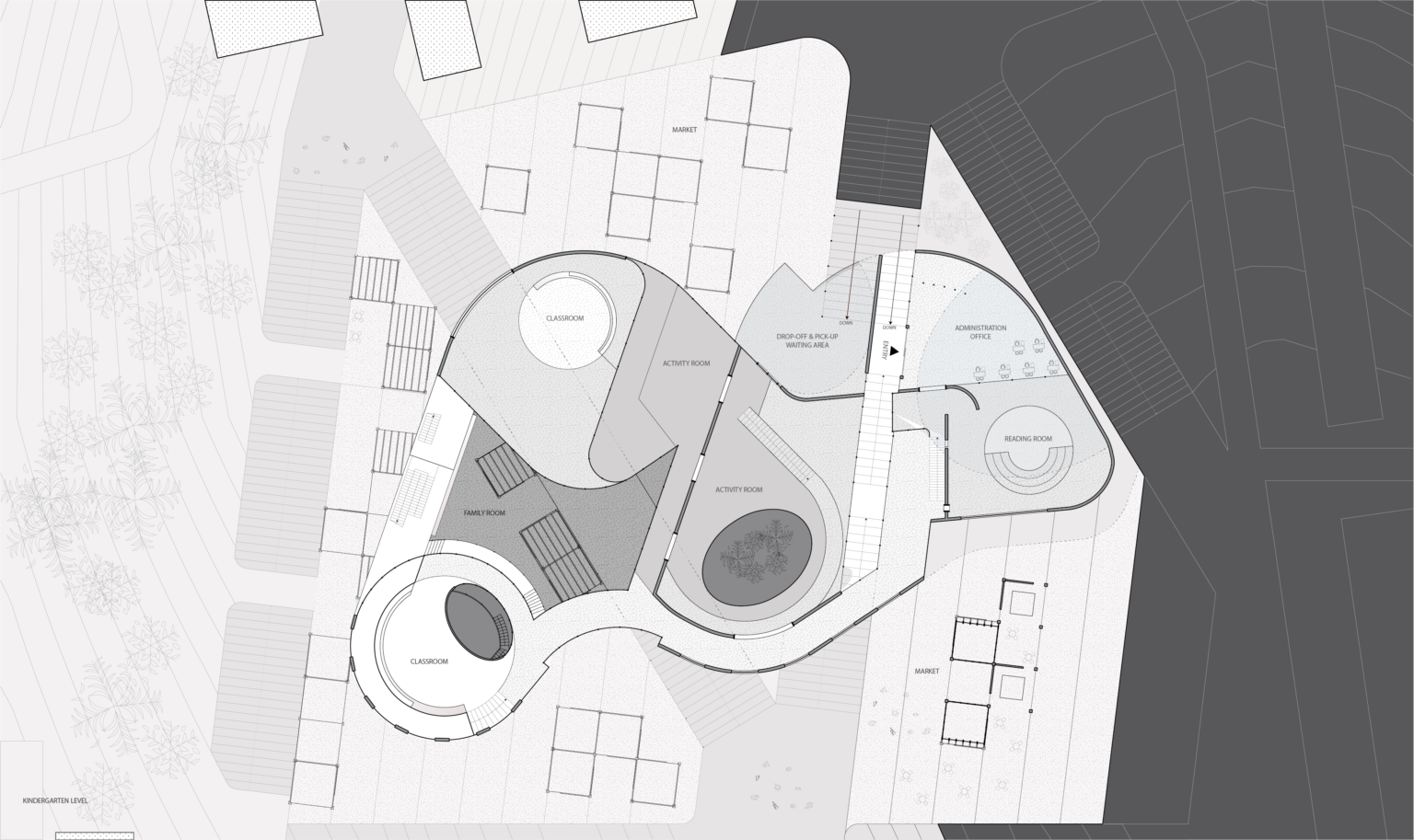
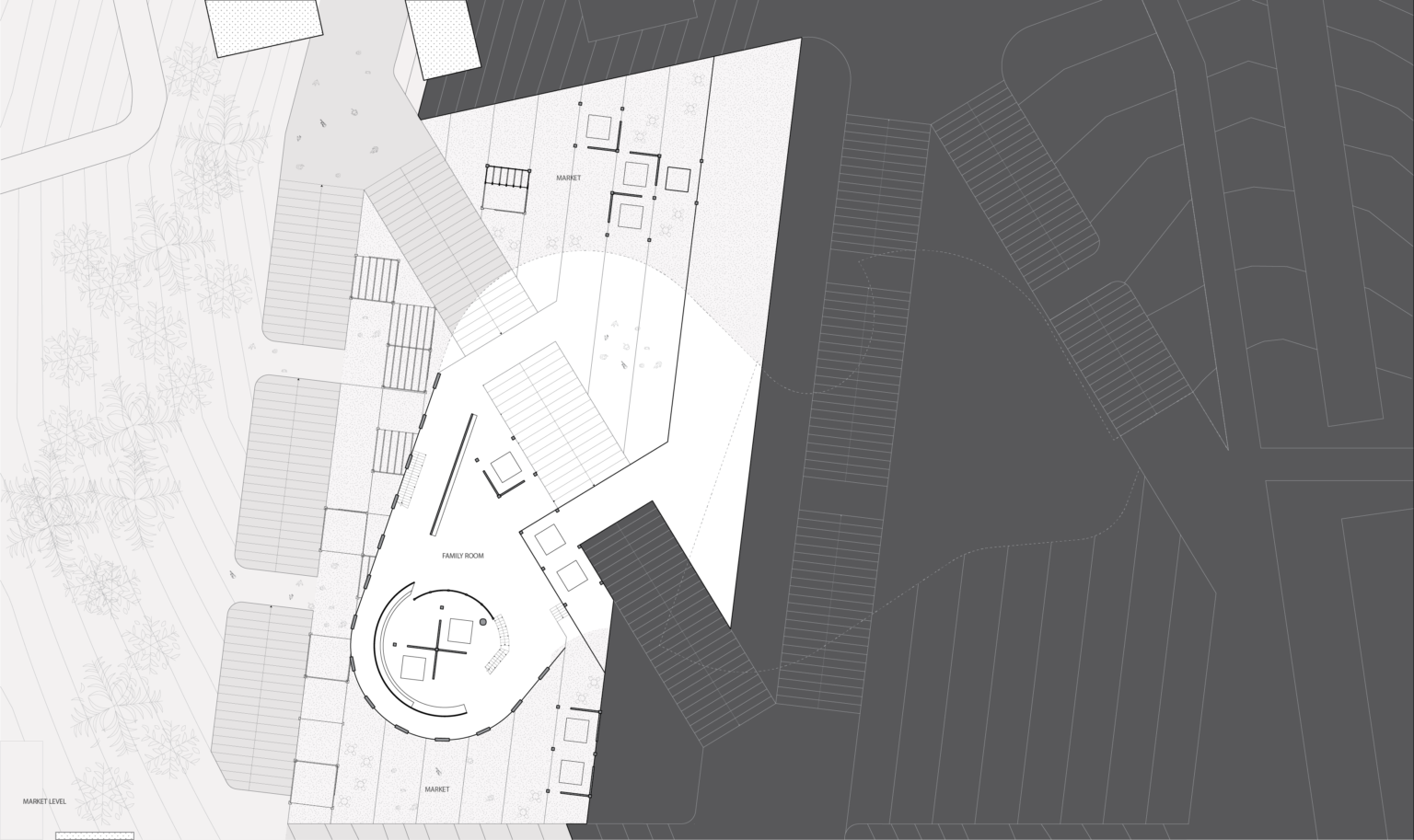
Curved corners and suspended walls function as vectors through our site to create concealed or revealed spatial relationships. Consequently, our design approaches hybridize two distinct architectural programs, a kindergarten and a market, which we call it “bi-vectoredâ€.
In the end, the project presents a new pedagogy for early childhood education, a school where the vectors of visuality and interactivity are conceived as a new way of interweaving in the public realm.
To be ageless is to be edgeless. We hope to propose non-hierarchical observation, exploration and communication inside the kindergarten and a market.
By Yiruo Li - ylix17@pratt.edu / Yuanming Ma - ymax2@pratt.edu
Degree Project | Spring 2020 | Studio Critics: Ostap Rudakevych / Tulay Atak / Timothy Simonds
This thesis project aims to challenge the historically theorized conception of surveillance, furthermore redefines and utilizes surveillance as an active vector through the language and configuration of architecture.
We define surveillance as an active rather than a passive action. It is a concurrent movement rather than a passive and asynchronous reaction capturing by surveillance cameras. Within the urban context, we also utilize it to address the cross-generational relationships on site.
Curved corners and suspended walls function as vectors through our site to create concealed or revealed spatial relationships. Consequently, our design approaches hybridize two distinct architectural programs, a kindergarten and a market, which we call it “bi-vectoredâ€.
In the end, the project presents a new pedagogy for early childhood education, a school where the vectors of visuality and interactivity are conceived as a new way of interweaving in the public realm.
To be ageless is to be edgeless. We hope to propose non-hierarchical observation, exploration and communication inside the kindergarten and a market.

Artist Statement
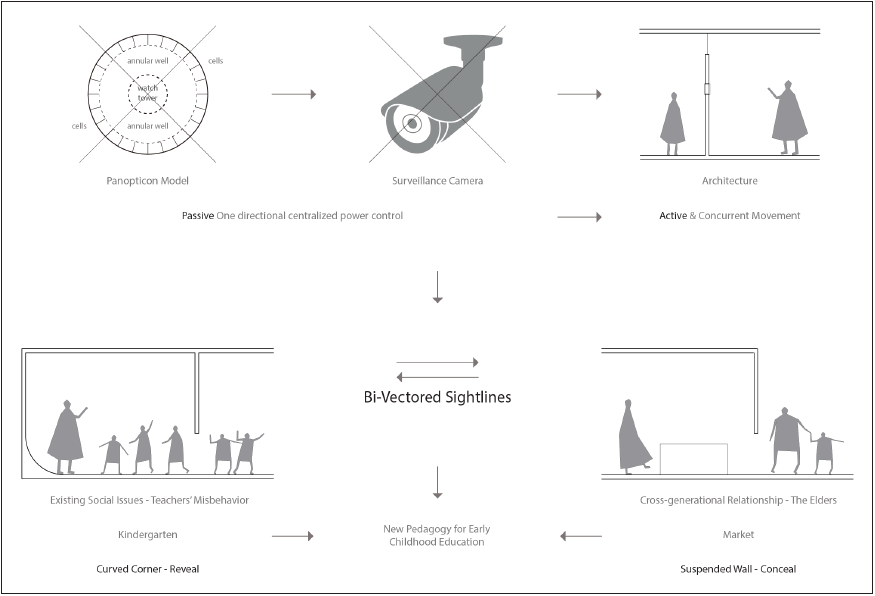
The discourse around surveillance is often historically and theoretically taken as a hierarchical tool centralizing power and control. Surveillance cameras installed in public spaces, to some extent, act as a way of supervision, as a result may better protect the disadvantaged groups, yet the public never knows who’s behind the scene. To rethink surveillance in this way, is to call into question the way surveillance has been theorized from, a central observation tower, as originated from Jeremy Bentham’s panopticon model. This thesis project aims to challenge its historically theorized conception of surveillance, furthermore redefines and utilizes surveillance as an “active vector†through the language and configuration of architecture. We define surveillance as an active rather than passive action. It is a concurrent movement rather than an asynchronous reaction. We utilize surveillance to address the cross-generational relationships within the urban context in Chongqing, China, eventually hybridizing two distinct architectural programs, a kindergarten and a market that host two generations of occupants. In the end, the project presents a new pedagogy for early childhood education, a school where the vectors of visuality and interactivity are conceived as a new way of interweaving in the public realm.
The French philosopher Michel Foucault described the occupants in the panopticon as “an object of information, never a subject in communication.†In the modern world, digital and data-driven surveillance is becoming analogous to this unequally surveilled model that the government is the only party who has the power to surveil the public. Nevertheless, surveillance does not have to be always hierarchically unequal. Architectural historian Beatriz Colomina believes that openings have effects on human perception. The openings or the transparency of certain architectural elements could create two parallel spaces that have equal visual relationship, where occupants of one space could actively watch the other, while knowing that those occupants are also being watched. It creates a more active and equal supervision, instead of surveillance cameras that record and respond only when necessary. As in math and physics, adding one vector would have an effect on the calculation result, the two parallel spaces adding visual effects to each other through bi-vectored relationships will have occupants of two spaces oversee each other simultaneously.
Taking architectural elements as an active vector for surveillance is also requested for disadvantaged groups due to safety concerns. Two years ago, a surveillance video showing kindergarten teachers’ misbehavior in educating children brought early childhood education to the publics’ attention and led to an intense discussion of how to monitor and regulate teacher’s behavior. Meanwhile, family education, another part that composes the entire pedagogy for young children, was evaluated in the discussion as well. In order to start rethinking the potentials of surveillance in pedagogy, and furthermore to think of surveillance as a bi-vectored and active architectural element for a new form of schooling, we must consider how education happens within the family unit.
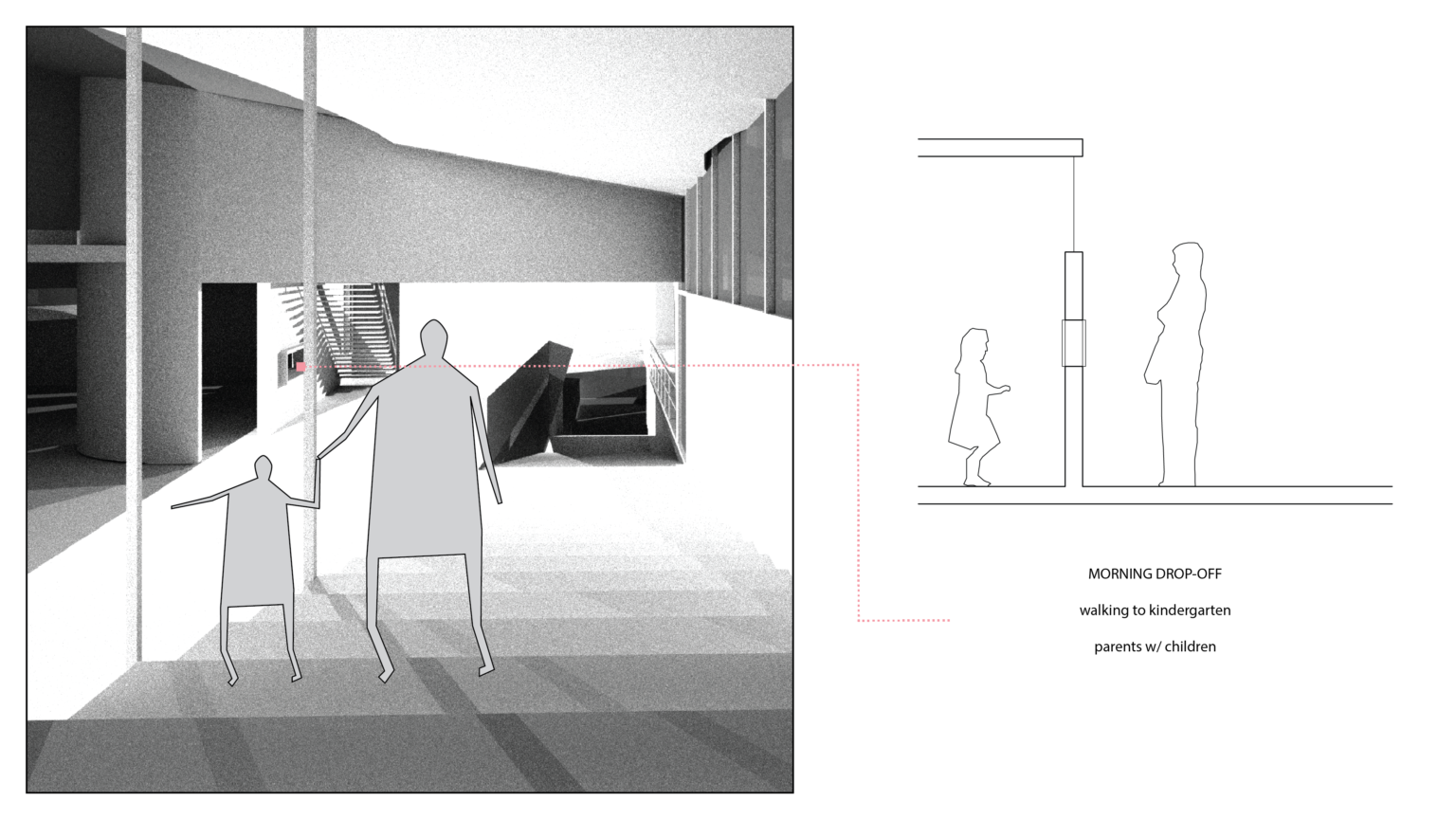
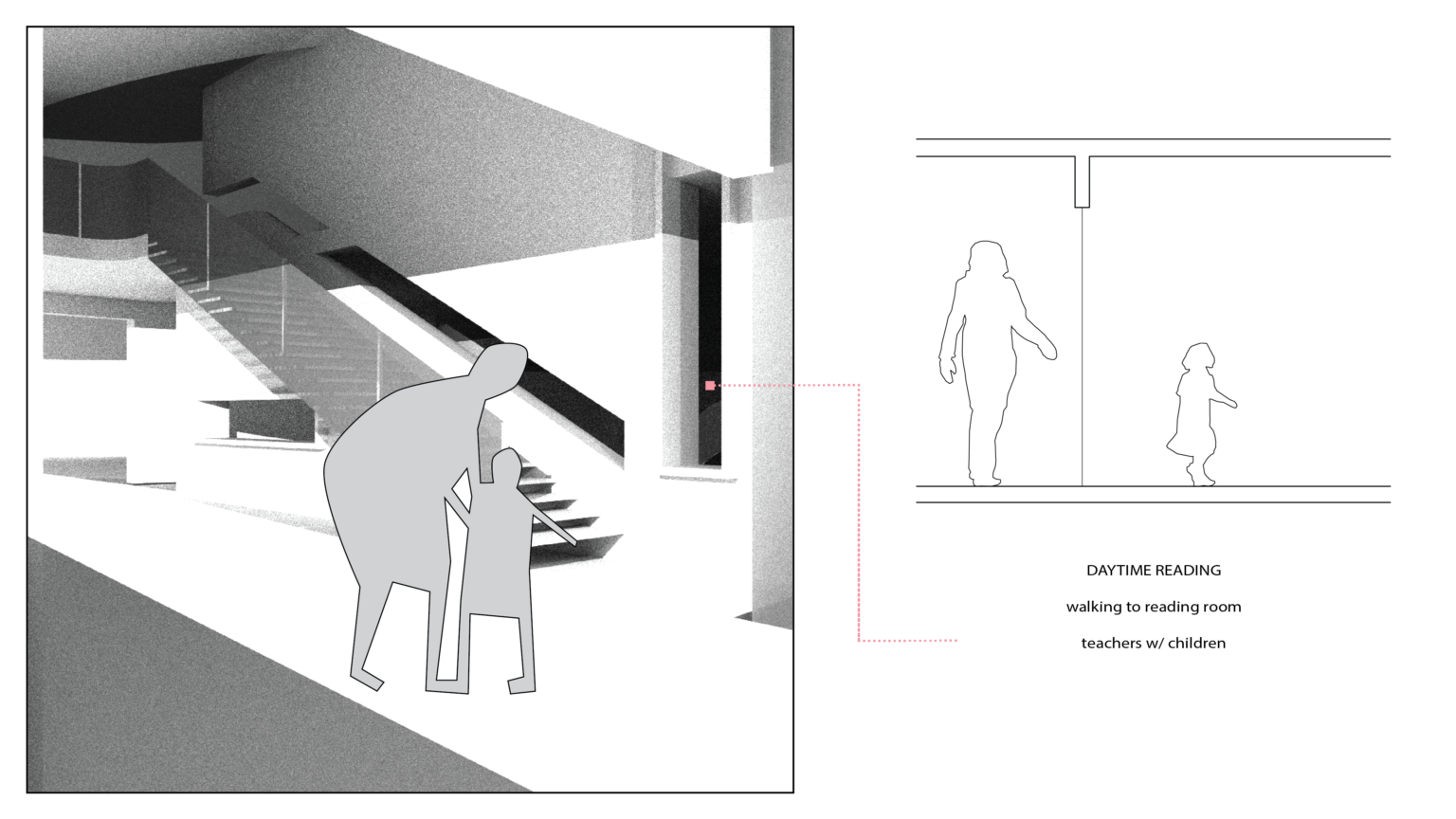
The potentials of surveillance as a part of education can be seen as “bi-vectored†when education takes place in the family unit, non-hierarchically and across roles. Grandparents volunteer to take care of their grandchildren when parents are busy with their work. While many grandparents spoil their grandchildren and refuse them to communicate with society in the excuse of protection, family education and schooling are isolated in reality. A relationship among children, grandparents, and teachers needs to be reconfigured in order to provide a more comprehensive learning environment for children.
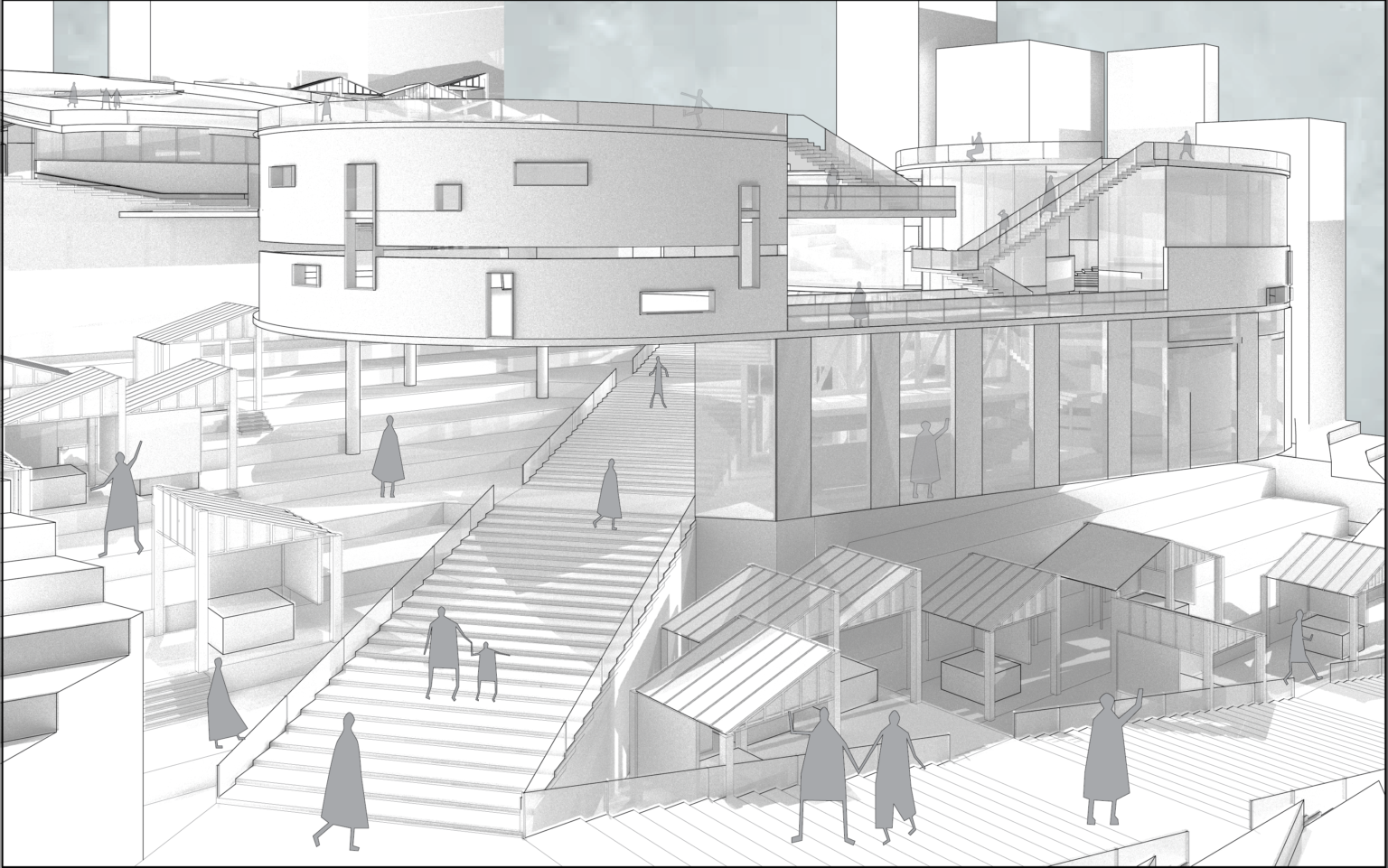
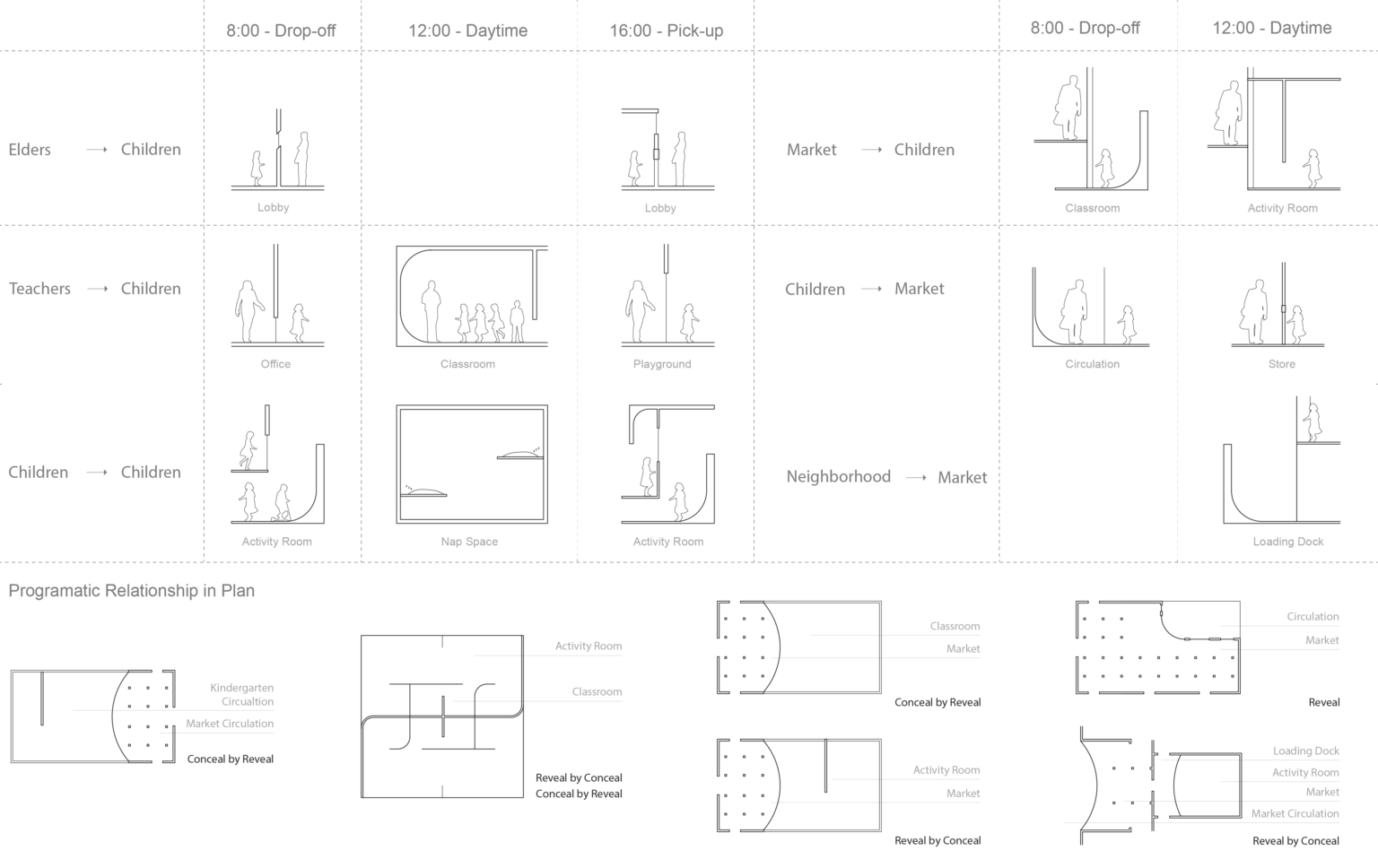
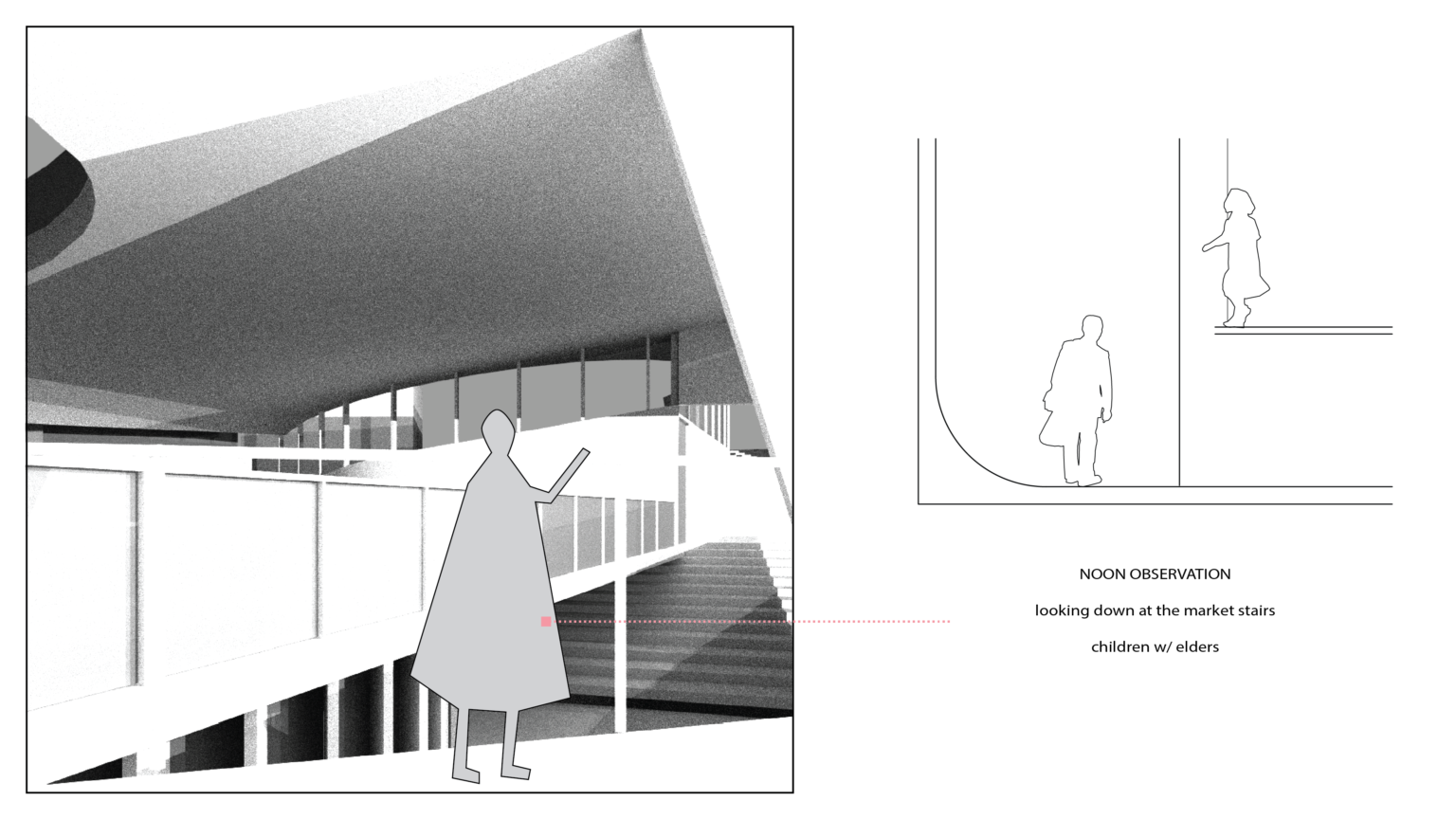
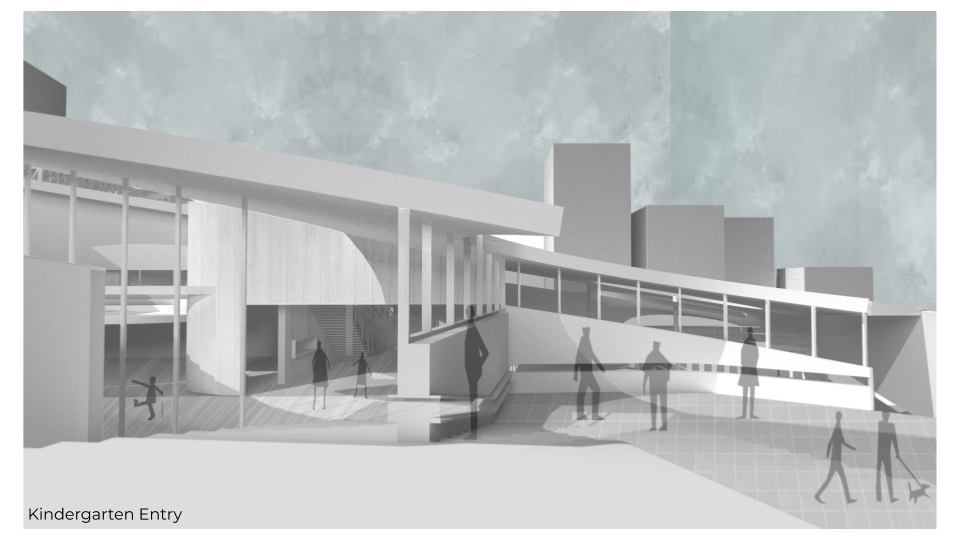
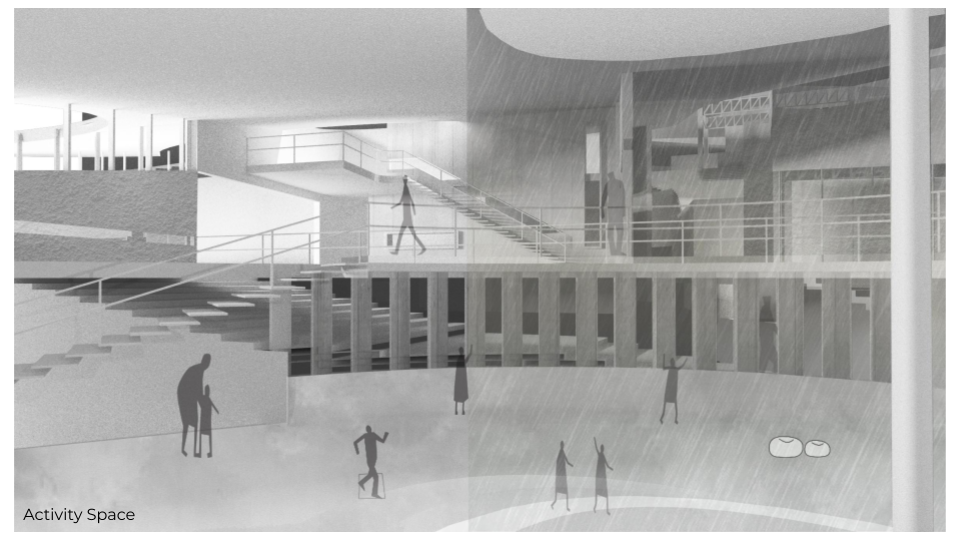
Market, a program that’s typically designed for a neighborhood, would have bivectored effects both for regulating teachers’ behavior, as well as creating a new way of schooling. By hybridizing a market serving the elders in the neighborhood will allow people to constantly travel and stop at the site during daytime, while limiting the access to its closed neighborhoods. The market can be understood as a vector, adding a layer of protection to the kindergarten, meanwhile creating a dialogue between two generations. Surveillance with this new definition, happens not only from the surrounding neighborhood to the kindergarten, but equally important from children’s perspective. Being the fact that current family and school education are separated, thus not effective, it’s supportive to take another look at education in a family unit. To be ageless is to be edgeless. We hope to propose non-hierarchical observation, exploration and communication inside the kindergarten and a market.
The French philosopher Michel Foucault described the occupants in the panopticon as “an object of information, never a subject in communication.†In the modern world, digital and data-driven surveillance is becoming analogous to this unequally surveilled model that the government is the only party who has the power to surveil the public. Nevertheless, surveillance does not have to be always hierarchically unequal. Architectural historian Beatriz Colomina believes that openings have effects on human perception. The openings or the transparency of certain architectural elements could create two parallel spaces that have equal visual relationship, where occupants of one space could actively watch the other, while knowing that those occupants are also being watched. It creates a more active and equal supervision, instead of surveillance cameras that record and respond only when necessary. As in math and physics, adding one vector would have an effect on the calculation result, the two parallel spaces adding visual effects to each other through bi-vectored relationships will have occupants of two spaces oversee each other simultaneously.
Taking architectural elements as an active vector for surveillance is also requested for disadvantaged groups due to safety concerns. Two years ago, a surveillance video showing kindergarten teachers’ misbehavior in educating children brought early childhood education to the publics’ attention and led to an intense discussion of how to monitor and regulate teacher’s behavior. Meanwhile, family education, another part that composes the entire pedagogy for young children, was evaluated in the discussion as well. In order to start rethinking the potentials of surveillance in pedagogy, and furthermore to think of surveillance as a bi-vectored and active architectural element for a new form of schooling, we must consider how education happens within the family unit.
The potentials of surveillance as a part of education can be seen as “bi-vectored†when education takes place in the family unit, non-hierarchically and across roles. Grandparents volunteer to take care of their grandchildren when parents are busy with their work. While many grandparents spoil their grandchildren and refuse them to communicate with society in the excuse of protection, family education and schooling are isolated in reality. A relationship among children, grandparents, and teachers needs to be reconfigured in order to provide a more comprehensive learning environment for children.
Market, a program that’s typically designed for a neighborhood, would have bivectored effects both for regulating teachers’ behavior, as well as creating a new way of schooling. By hybridizing a market serving the elders in the neighborhood will allow people to constantly travel and stop at the site during daytime, while limiting the access to its closed neighborhoods. The market can be understood as a vector, adding a layer of protection to the kindergarten, meanwhile creating a dialogue between two generations. Surveillance with this new definition, happens not only from the surrounding neighborhood to the kindergarten, but equally important from children’s perspective. Being the fact that current family and school education are separated, thus not effective, it’s supportive to take another look at education in a family unit. To be ageless is to be edgeless. We hope to propose non-hierarchical observation, exploration and communication inside the kindergarten and a market.